Amity University Haryana Inaugurates Five-Day National FDP on Outcome-Based Education and Curriculum Excellence
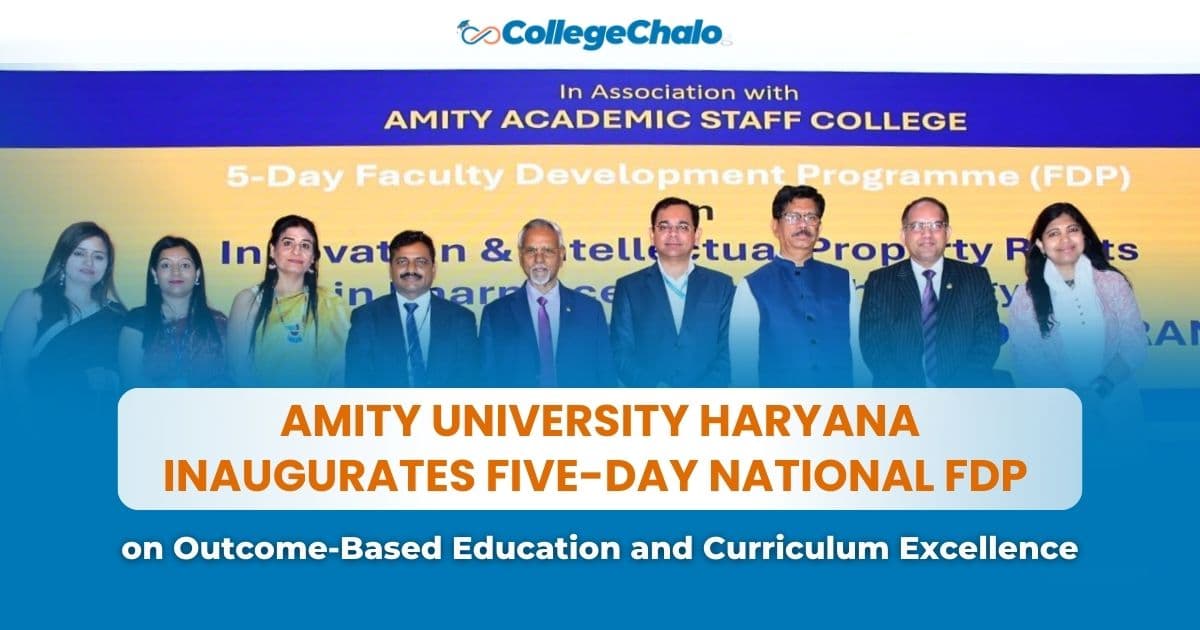
In a bid to revolutionize teaching methodologies and curriculum design, Amity University Haryana (AUH) has inaugurated a five-day national Faculty Development Programme (FDP) on “Outcome-Based Education and Curriculum Excellence.” The move reflects the institution’s commitment to equipping educators with modern pedagogical tools and aligning academic offerings with the evolving demands of higher education.
Why Outcome-Based Education Matters
Outcome-Based Education (OBE) is an educational approach that centers around clearly defined learning outcomes what students should know and be able to do by the end of a course or program. Rather than simply delivering lectures, OBE demands backward planning: educators begin with the desired outcomes and then design curriculum, teaching methods, and assessments to ensure those outcomes are met.

By focusing on competencies academic, professional, and life-skills OBE aims to produce graduates who are not only knowledgeable but also industry-ready, adaptable, and socially responsible. For higher-education institutions, this translates into consistency, clarity, and accountability across programs.
What the FDP Aims to Achieve
The FDP at AUH is designed to build faculty capacity in several critical areas related to OBE and curriculum design:
-
Training educators in structuring programs around desired learning outcomes — ensuring that course content, teaching strategies, and assessment methods are aligned with what students should achieve.
Enhancing readiness for institutional accreditation by integrating best practices in curriculum planning, evaluation, and continuous improvement.

Promoting curriculum excellence by encouraging a shift from traditional “content-driven” teaching to “outcome-driven” learning, thereby improving the relevance and impact of academic programs.
The broader vision: to produce graduates who are not just academically equipped, but also possess the skills, competencies, and ethical foundations essential for real-world success.
Significance for Educators and Institutions
For educators participating in the FDP, this initiative presents a valuable opportunity to rethink and upgrade their teaching philosophy. Instead of focusing solely on syllabus coverage, teachers acting as facilitators and mentors are encouraged to pay attention to overall learning outcomes and competencies. This aligns well with global educational trends emphasizing holistic development.

For institutions like Amity University Haryana and others adopting OBE, the approach can yield long-term benefits: improved quality of teaching, better learning outcomes for students, and a transparent mechanism to evaluate and enhance programs through regular outcome assessments.
Moreover, OBE’s emphasis on employability, industry-relevant skills, and value-based education can strengthen the link between academia and real-world demands, helping graduates stay competitive in a rapidly evolving job market.
Broader Context: Shifting Academic Paradigms for Amity University Haryana
The launch of this FDP at Amity University Haryana reflects a broader shift in Indian higher education. Institutions are increasingly embracing Outcome-Based Education combined with flexible curriculum frameworks (such as Choice-Based Credit System, where applicable), to remain responsive to changing industry demands and to global standards.
Such programs also foster continuous quality improvement. Through structured outcome assessment plans, universities can periodically review whether their educational offerings actually deliver the promised skills and competencies, and adjust curriculum, pedagogy, or assessment methods accordingly.

In essence, the FDP is a strategic step toward nurturing academic environments that prioritize learning outcomes, student growth, and institutional excellence.
What This Means for Students and the Future
Students stand to benefit significantly from institutions implementing OBE through such faculty development efforts. With curricula reoriented around what they need to achieve (knowledge, skills, values), students receive clearer guidance, more meaningful assessments, and education that is more relevant to contemporary needs.
In the long run, graduates from such institutions are likely to emerge with a stronger mix of competence, adaptability, and real-world readiness qualities increasingly valued in workplaces and society at large.
For Amity University Haryana, the FDP serves as reaffirmation of its commitment to academic excellence and innovation in pedagogy. If implemented effectively, this shift toward outcome-based curriculum excellence could set a precedent for other universities aiming for high-quality, future-ready education.
Conclusion
The five-day National FDP on Outcome-Based Education and Curriculum Excellence inaugurated by Amity University Haryana marks an important milestone not only for the university but also for the broader higher education community in India. By championing an outcomes-driven, competency-oriented approach to curriculum and teaching, Amity University Haryana is promoting a shift from traditional content-delivery models toward holistic education that prepares students for real-world challenges. As more institutions adopt such frameworks, the future of higher education in India looks more aligned with global standards, relevance, and sustainability.

Vani Jha is a creative content writer with over 2 years of experience in producing engaging, informative, and well-researched content across various domains. Her expertise lies in SEO, research, editing, and content and copywriting. With a proven track record in enhancing online presence and audience engagement, Vani excels in crafting compelling articles, blogs, and other written materials.
Related News
Introducing The Soch Centre (SoCH) | Sai University – School of Arts & Sciences

Admissions 2026 Opening Soon at VIT Chennai!

Ph.D. 2025 – Phase 2 Admissions Now Open at Amrita Vishwa Vidyapeetham
Join the Conversation on the Future of MedTech: Trends & Opportunities for MedTech Engineers