Karnataka Medical Education Soars: 600 New Seats, NRI Quota Proposed
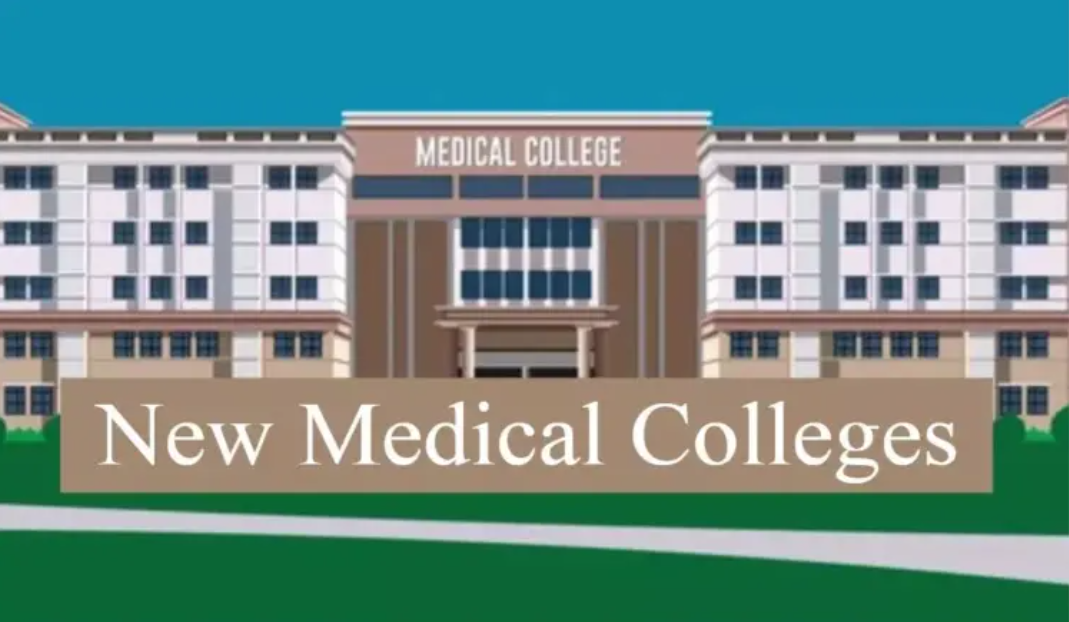
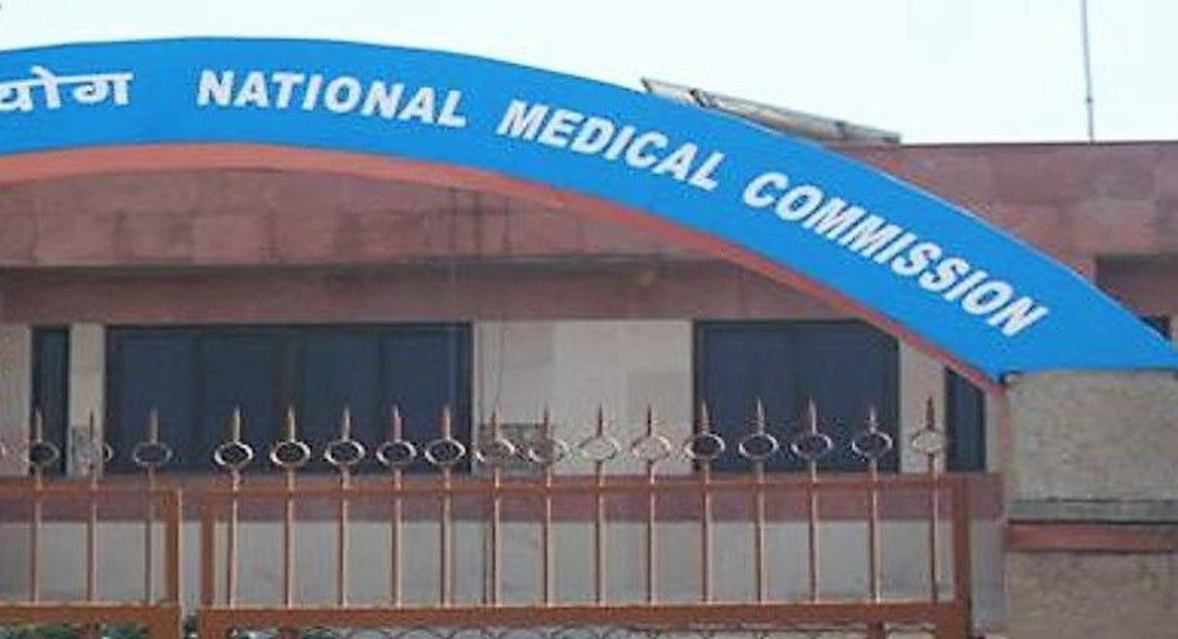
In a giant stride for clinical training, the country of Karnataka is ready to set up 4 new undergraduate clinical schools, way to the current approval from the National Medical Commission (NMC). This development, scheduled for the instructional 12 months 2024-25, will introduce a further six hundred clinical seats, marking a considerable enlargement of the country’s academic infrastructure. Read more,Karnataka PGCET 2024 Postponed & Applications Open Again! Don’t Miss Out
Details of the New Colleges
The four newly approved medical colleges will each offer 150 seats, and they include:
Ramanagara Institute of Medical Sciences, Ramanagara
Kanakapura Institute of Medical Sciences, Kanakapura, Ramanagara District
BGS Medical College and Hospital, Nagarur, Bengaluru North
PES University Institute of Medical Sciences and Research, Konappana Agrahara, Electronics City, Bengaluru
These new institutions will augment Karnataka’s total number of medical colleges to 74, encompassing both government and private sectors. Prior to this expansion, the state had 70 medical colleges with a combined capacity of 11,745 seats for the 2023-24 academic year. With the addition of the new colleges, the total number of medical seats will rise to 12,345.
Political Context and Significance
The decision to establish a new medical college in Kanakapura initially planned for the Rajiv Gandhi University of Health Science campus in Ramanagara, was fraught with political controversy. This move was followed by Deputy Chief Minister D. K. Shivakumar and Union Minister H.D. causing disagreement between them. Kumaraswamy makes it a matter of political prestige. However, the issue was resolved amicably with both Ramanagara and Kanakapura organizing medical colleges.
Proposal for NRI Quota and Additional MBBS Seats
In parallel with the expansion, the Karnataka government has proposed the introduction of an NRI quota within its government medical colleges. This initiative aims to create 508 additional supernumerary MBBS seats across 22 government medical colleges starting from the academic year 2025-26. Medical Education Minister Sharan Prakash Patil has formally requested the NMC to sanction this proposal.
Rationale Behind the NRI Quota
The proposal for an NRI quota is grounded in the University Grants Commission (UGC) guidelines, which emphasize the inclusion of international students in both undergraduate and postgraduate programs. The National Education Policy 2020 further advocates for increasing the intake of international students to enhance global outreach. Additionally, states such as Rajasthan, Haryana, Punjab, Himachal Pradesh, and Puducherry have already implemented NRI quotas, charging substantial fees ranging from USD 75,000 to USD 100,000 for a five-year course.
Currently, in Karnataka, only private medical colleges offer NRI seats, with fees ranging between Rs 1 crore and Rs 2.5 crore. The proposed NRI quota in public higher education institutions is expected to follow the financial model with the proposed fee pegged at 25 lakh rupees per student. The program is expected to improve the financial health of the state’s healthcare facilities, generating significant revenue of up to $127 million in the first year and up to $571.5 million in the fifth year.
Financial Implications and Benefits
Minister Patil emphasized that the additional resources provided by the NRI quota will go a long way in transforming private health institutions into the highest quality institutions. Revenues will support a variety of needs, including quality education, training, maintenance, purchase of medical equipment and pharmaceuticals, patient care, infrastructure development, faculty expansion and research activities.
Current Capacity and Future Prospects
Currently, 22 state medical schools affiliated with the Department of Medicine have a quota capacity of 3,450 in the 2023-2024 academic year. Of this, 85% (2,929 seats) are reserved for students from Karnataka and 15% (521 seats) are reserved for Indian quota. The proposal to add 508 more seats for NRI students is being considered as a possible solution without jeopardizing the regular supply of seats and preventing protests from students and parents.
Minister Patil remains optimistic that the Centre will approve the state’s request, enabling Karnataka to commence the NRI quota from the 2025-26 academic year, thereby further strengthening its medical education framework.
More than 4 lakh students across Odisha are refreshing their phones right now — waiting for one announcement that could change the direction of their lives.
The CHSE Odisha 12th Result 2026 is officially expected on May 20, 2026, confirmed by Schools & Mass Education Minister Nityananda Gond. Whether you appeared for Science, Commerce, Arts, or Vocational streams, this is the moment you’ve been preparing for since February.
In this complete guide, you’ll learn:
The exact result date and time (and what happened in 2025 for comparison)
Step-by-step instructions to check your result online, via SMS, and on DigiLocker
How to decode every symbol and grade on your marksheet
Pass marks, eligibility criteria, and what to do if you’re not satisfied with your score
All important dates from exam day to supplementary results
Staying on top of these dates will help you plan your next academic move without missing deadlines.
Event
Date
Class 12 Exams Begin
February 18, 2026
Class 12 Exams End
March 25, 2026
Internal Assessment (held earlier)
December 22–31, 2025
Practical Exams
January 2–15, 2026
Result Declaration (Expected)
May 20, 2026
Revaluation/Rechecking Application Opens
After result (June 2026, tentative)
Revaluation Results
June/July 2026
Supplementary Exam Time Table
July 2026 (tentative)
Supplementary Exams
August 2026 (tentative)
Supplementary Results
After August 2026
Note: In 2025, CHSE declared results on May 21 at 4:00 PM. Plan your result-checking window accordingly.
How to Check CHSE Odisha +2 Result Online
When the result goes live, official websites will see massive traffic spikes. Follow these steps quickly and calmly:
Step 1: Open any of these official portals in your browser:
orissaresults.nic.in(primary)
results.odisha.gov.in
chseodisha.nic.in
results.shiksha(alternative)
Step 2: Look for the link labelled “CHSE Odisha +2 Result 2026” on the homepage.
Step 3: Select your stream — Science, Arts, Commerce, or Vocational.
Step 4: Enter your Roll Number and Registration Number exactly as printed on your admit card.
Step 5: Click “Get Result” or “Submit”.
Step 6: Your result will appear on screen. Download and save a PDF copy immediately for future use.
Pro Tip: If the website crashes due to traffic, wait 10–15 minutes and try again. Don’t panic — results stay live for weeks.
Alternative Ways to Check Result
Via SMS
If websites are slow or unavailable, SMS is your fastest fallback:
Type: RESULT FOR12 <YOUR ROLL NUMBER>
Send to: 56263
Your result will be delivered directly to your mobile
Via DigiLocker
DigiLocker provides an official, government-verified digital copy of your marksheet — useful for college admissions:
Visit digilocker.gov.in or open the DigiLocker app
Log in with your Aadhaar-linked mobile number
Search for “CHSE Odisha +2 Marksheet 2026”
Download the verified marksheet
DigiLocker marksheets are accepted as authentic documents by most colleges and universities.
Marksheet Symbols & Grading System Explained
CHSE Odisha uses a 9-point grading scale — no traditional divisions like First Class or Second Class. Here’s what every grade on your marksheet means:
Grade
Performance Level
Marks Range (%)
A1
Outstanding
91% and above
A2
Excellent
81% – 90%
B1
Very Good
71% – 80%
B2
Good
61% – 70%
C1
Above Average
51% – 60%
C2
Average
41% – 50%
D
Pass
33% – 40%
E1
Needs Improvement (Fail)
Below 33%
E2
Fail
Very Low Score
Understanding Key Symbols on Your Marksheet
P (Pass): You’ve cleared the subject.
F (Fail): Marks are below the minimum threshold in that subject.
A (Absent): You did not appear for the exam.
EX (Exempted): Subject exempted for medical or other official reasons.
W/H (Withheld): Result is on hold, usually due to pending dues or malpractice investigation.
Important: Students with E1 or E2 in any subject are required to appear for supplementary exams. No grade below D is considered a pass.
Pass Marks & Eligibility Criteria 2026
Minimum Passing Requirement
To be declared PASS in the CHSE Odisha Class 12 exam 2026, a student must:
Score at least 33% marks in every subject (both theory and practical separately)
Maintain an aggregate score of 33% across all subjects
Subject-Wise Breakdown
Paper Type
Full Marks
Minimum Passing Marks
Theory (without practical)
80
24 marks (30%)
Theory (with practical component)
70
21 marks (30%)
Practical / Internal Assessment
30
Evaluated separately
Note: Scoring well in practicals will NOT compensate for failing a theory paper. Both components must be cleared independently.
Who is Eligible to Check Results?
Any student who appeared for the CHSE Odisha Annual Higher Secondary Examination 2026 — including regular, ex-regular, and vocational stream students — can check their result using their roll number and registration number from the admit card.
What’s on Your CHSE Marksheet?
When you download your provisional marksheet, here’s what to verify immediately:
Student’s Full Name
Roll Number & Registration Number
Date of Birth
Stream (Science / Arts / Commerce / Vocational)
Subject-wise Theory Marks
Subject-wise Practical / Internal Marks
Total Marks Obtained
Grade Awarded per Subject
Overall Qualifying Status (Pass / Fail)
Critical Reminder: The result available online is provisional. Your original marksheet and pass certificate will be issued by your school once CHSE dispatches them officially. Contact your school after results are declared.
What to Do After Results – Next Steps
Getting your result is just the beginning. Here’s a practical roadmap:
If You Passed
Download and save your provisional marksheet immediately
Collect your original marksheet from school as soon as it arrives
Begin researching degree colleges, entrance exams, and courses
Check admission portals like SAMS Odisha (samsodisha.gov.in) for Plus 3 admissions
Prepare for entrance exams like OJEE, NEET, JEE, CUET depending on your stream
Explore vocational courses, diplomas, and skill certifications if you want practical career paths
If You Did Not Pass
Don’t be discouraged — supplementary exams give you another fair chance
Register for the Compartmental / Supplementary Exam 2026 (expected August 2026)
Focus on the specific subjects you need to clear
Use the improvement exam facility introduced in 2026 to boost scores even if you’ve passed
Revaluation, Rechecking & Improvement Exam
Revaluation / Rechecking
Not happy with a particular subject score? You have the right to apply for re-evaluation:
Fee: ₹200 per subject
Apply through your school or online after the result
Submit within the announced deadline (usually 2–3 weeks after results)
If marks change after revaluation, a revised marksheet is issued
Improvement Exam – New in 2026
In a student-friendly move, CHSE Odisha introduced an improvement exam system in 2026. This allows students who have already passed to reappear in specific subjects to improve their score for better college admissions.
Registration typically opens in May
Exams are usually held in June
Results are declared by July
This is especially valuable for students targeting merit-based seats in top colleges.
Common Mistakes to Avoid
Even a minor slip during result-checking can cause unnecessary stress. Watch out for these:
Using unofficial websites – Stick only to orissaresults.nic.in or results.odisha.gov.in
Entering wrong roll number – Double-check before clicking submit
Not downloading the result immediately – Websites can go down temporarily; save a copy right away
Ignoring errors on the marksheet – Check every detail and report discrepancies to school immediately
Waiting for individual notifications – CHSE does not send personal SMS alerts about result declaration; monitor official channels yourself
Assuming the online result is the final document – Always collect the original marksheet from your school
Key Takeaways
The CHSE Odisha 12th Result 2026 is expected on May 20, 2026, confirmed by the state education minister
Results for Science, Commerce, Arts, and Vocational streams will be released simultaneously
Check results at orissaresults.nic.in, via SMS (56263), or through DigiLocker
You need your roll number + registration number to access your result
Minimum pass mark is 33% in each subject and 33% aggregate
CHSE uses a 9-point grading system from A1 (Outstanding) to E2 (Fail)
The online marksheet is provisional — collect the original from your school
Improvement exams (new in 2026) allow passed students to reappear and boost scores
Over 4 lakh students appeared in the 2026 exams; the 2025 pass rate was 82.77%
Conclusion
The wait is almost over. With the CHSE Odisha 12th Result 2026 set to go live on May 20, students across Odisha are just days away from learning the outcome of months of hard work.
Whatever your result, remember it’s a milestone — not a final verdict on your potential. Whether you’re heading to a top college, applying for competitive exams, or planning to use the new improvement exam to strengthen your score, this result opens more doors than it closes.
Bookmark the official site orissaresults.nic.in, keep your roll number handy, and check your result as soon as it’s announced. Then make your next move with confidence.