
Become a Physiotherapist in India : Top Colleges, Courses & Career Guide

Become a Physiotherapist in India: Your Complete Guide to Success!
Embarking on the path to become a physiotherapist is a noble and rewarding choice. This detailed guide aims to provide you with all the necessary information on physiotherapy education, qualifications required for various courses, and a curated list of the top 10 best physiotherapy colleges in India. Whether you are a high school graduate looking to pursue a physiotherapy course after 12th grade or aiming to advance your career with a higher degree, this guide covers everything you need to know. Read more, Top 20 Career Options After Paramedical Courses


Understanding Physiotherapy
Physiotherapy is a dynamic healthcare profession focused on improving patient well-being through physical rehabilitation, injury recovery, and the promotion of overall health and fitness. It involves various treatments and techniques designed to restore, maintain, and enhance physical functionality and mobility. Physiotherapists play a critical role in helping individuals manage pain, prevent injuries, and improve their quality of life.
Courses in physiotherapy are available at different educational levels, including Bachelor of Physiotherapy (BPT), Master of Physiotherapy (MPT), and various diploma and certificate programs. As part of the rapidly growing healthcare sector, these courses emphasize effective treatment techniques that professionals must stay informed about to provide high-quality care.
Details of Physiotherapy Courses
Course Levels:
- Bachelor’s Degree (BPT)
- Master’s Degree (MPT)
- Diploma Courses
- Certificate Programs
Duration:
- Undergraduate Course (BPT): 3-4 Years
- Postgraduate Course (MPT): 2-3 Years
- Diploma Course: 2-3 Years
- Certificate Course: 6 Months – 1 Year
Eligibility Criteria:
- Undergraduate Course (BPT): Completion of 10+2 from a recognized board with Physics, Chemistry, and Biology.
- Postgraduate Course (MPT): Minimum of 50% marks in a Bachelor’s degree in physiotherapy.
- Diploma Course: Completion of 10+2 with relevant subjects.
- Certificate Course: Completion of 10+2 from a recognized board.
Course Fees:
- Undergraduate Course (BPT): ₹45,000 – ₹1,50,000 per year
- Postgraduate Course (MPT): ₹85,000 – ₹2,50,000 per year
- Diploma Course: ₹10,000 – ₹25,000 per year
- Certificate Course: ₹5,000 – ₹15,000 per year
Admission Process for Physiotherapy Courses
The admission process for physiotherapy courses in India varies depending on the institution and the course level. It primarily follows two pathways: direct admission and entrance-exam-based admission.
Direct Admission
Admission depends on the candidate’s academic performance in his qualifying examinations. Candidates must meet the minimum admission criteria set by each college, which usually includes their 10+2 or equivalent exams with core subjects like Physics, Chemistry and Biology. Universities also take extracurricular achievements and other relevant qualifications into account when making a selection. In this way, students who have demonstrated academic excellence can gain access to the desired course without the need for another entrance exam. Admission is based on the admission entrance examination.

Entrance-Exam-Based Admission
Many prestigious physiotherapy colleges and universities in India prefer to select candidates through entrance examinations. These exams are designed to assess the candidates’ knowledge and aptitude in relevant subjects. The entrance-exam-based admission process ensures a standardized selection procedure, enabling institutions to identify the most capable students for their programs.
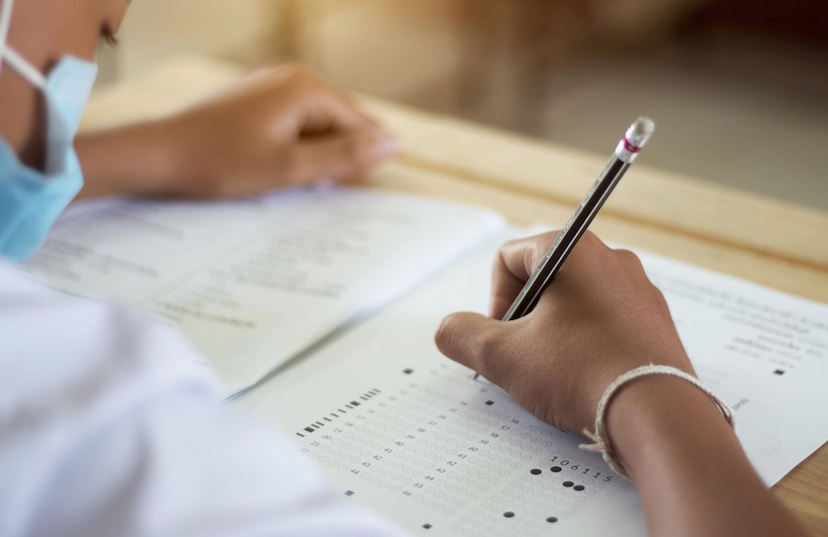
Physiotherapy Entrance Exams
Physiotherapy Entrance Exams Several country-wide and country-stage front tests are performed for admission to physiotherapy guides. Here are a number of the not unusual place front tests that aspiring physiotherapy college students may also want to seem for


Core Subjects in Physiotherapy Courses
The curriculum of physiotherapy guides is designed to offer college students with a complete know-how of the human frame, its capabilities, and the strategies required for bodily rehabilitation. Here are the central topics generally included in physiotherapy programs
- Anatomy: This difficulty specializes in the shape of the human frame, along with bones, muscle groups, organs, and tissues. Understanding anatomy is essential for physiotherapists to pick out and deal with bodily illnesses effectively.
- Physiology: Physiology offers the capabilities and mechanisms of the human frame. It allows college students to apprehend how extraordinary structures of the frame paintings and the way they reply to numerous bodily therapies
- Microbiology: This difficulty covers the look at of microorganisms, along with bacteria, viruses, fungi, and parasites. Knowledge of microbiology is critical for know-how infections and enforcing suitable sterilization strategies.
- Biochemistry: Biochemistry includes the look at of chemical tactics in the human frame. It allows college students to apprehend the biochemical foundation of fitness and disease, which is crucial for powerful remedy planning.
- Pharmacology: Pharmacology is the study of drugs and their effects on the human body. Physiotherapy students need to understand pharmacology to manage and complement physiotherapeutic treatments with appropriate medication when necessary.
- Application of Physiotherapy: This difficulty covers the sensible components of physiotherapy, along with numerous strategies and modalities used for remedy. It consists of hands-on education in exercises, guide therapy, and using electro-bodily agents.
- Biomechanics: Biomechanics includes the look at of the mechanical ideas of motion and the way they follow the human frame. It allows physiotherapists to examine and enhance patients’ motion styles to save accidents and beautify performance.
- Kinesiology: Kinesiology is the look at human motion. It integrates information from anatomy, physiology, and biomechanics to apprehend how muscle groups and joints paint collectively throughout extraordinary activities. This know-how is essential for designing powerful rehabilitation programs.
Job Roles:
- Potential roles include Physiotherapist, Sports Physiotherapist, Rehabilitation Therapist, and Community Therapist.
Salary Expectations:
- Entry Level: ₹2.5 – ₹5 LPA
- Mid-Level: ₹4 – ₹6 LPA
- Senior-Level: ₹6 – ₹8 LPA
Top 10 Best Physiotherapy Colleges in India
Here is a list of the top 10 physiotherapy colleges in India, renowned for their excellent education, exposure, and hands-on experience:
- PGIMER Chandigarh – Postgraduate Institute of Medical Education and Research, Chandigarh
- SDM College of Physiotherapy, Karnataka
- St John’s Medical College, Karnataka
- BITS Institute of Physiotherapy, Gujarat
- Hemwati Nandan Bahuguna Uttarakhand Medical Education University, Uttarakhand
- Jamia Hamdard, New Delhi
- Dayananda Sagar College of Physiotherapy, Karnataka
- JSS College of Physiotherapy, Karnataka
- Dr. DY Patil University, Maharashtra
- Sri Ramachandra Institute of Higher Education and Research, Tamil Nadu
These colleges offer a comprehensive curriculum that combines theoretical knowledge with practical training, preparing students for successful careers in physiotherapy.

Conclusion
Choosing to pursue a degree in physiotherapy colleges+ is a promising step towards a rewarding career dedicated to improving patient health and well-being. With the increasing demand for qualified physiotherapists, obtaining a degree from one of India’s top colleges will equip you with the knowledge, skills, and experience necessary to excel in this field. Whether you are beginning your journey with a bachelor’s degree or seeking to advance your expertise with a master’s, this guide will help you make an informed decision and set you on the path to success in the field of physiotherapy.
Also, read

Related News

Dialogue Bridges Wars: Dr. Tamilisai Ignites SRM SOLMUN 2026 MUN Mania

Structural and Pedagogical Analysis of TS SSC Mathematics Exam 2026

IIT Guwahati’s ₹120 PCM Bricks : The Future of Cooling Without AC in India

CBSE Class 12 Biology Exam 2026: A Shift Towards Conceptual Learning and Digital Evaluation

JEE Main 2026 Session 2 Admit Card Out — Download Your Hall Ticket Now ,Release Dates (March 28–30)
Bihar Board Result 2026: Toppers, Pass %, Live Updates | BSEB Matric

Everything BSEB Matric students need — result link, topper names, how to download marksheet, scholarships & what to do next.
March 29, 2026BSEB Class 10
81.79%Overall Pass Rate
15.1L+Students Appeared
492/500Top Score (98.4%)
139Students in Top 10
The wait is finally over. The Bihar School Examination Board (BSEB) officially declared the Bihar Board 10th Result 2026 on March 29, 2026 at 1:15 PM — making Bihar State Board the first education board in India to release both its 10th and 12th results in March 2026.
Whether you are a student anxiously refreshing the result portal, a parent waiting for good news, or someone tracking education news, this guide covers everything: result statistics, topper details, how to download your marksheet step by step, scholarship amounts, and what to do after the result. Let’s get into it.
Table of Contents
- Bihar Board 10th Result 2026 Declared — Key Facts
- BSEB 2026 Topper List — Who Topped Bihar Board?
- Pass Percentage & Student Statistics
- How to Check Your Bihar Board 10th Result (Step by Step)
- Scholarships & Awards for Top Performers
- What to Do After the Result — Scrutiny, Compartment & Admissions
- Key Takeaways
- Frequently Asked Questions (FAQs)
Bihar Board 10th Result 2026 Declared — Key Facts
The BSEB Chairman Anand Kishor announced the Bihar Board Matric Result 2026 in a press conference alongside State Education Minister Sunil Kumar. The official result is available on the board’s primary portals.
Result Date & Time: March 29, 2026 at 1:15 PM IST Official Websites: results.biharboardonline.com | secondary.biharboardonline.com | matricbiharboard.com Required Details: Roll Code (5 digits) + Roll Number (7 digits)
The exams were conducted from February 17 to February 25, 2026 across designated centres statewide. More than 15 lakh students sat for the examination — one of the largest cohorts in the country.
BSEB 2026 Topper List — Who Topped Bihar Board?
Two students have jointly secured the 1st rank in the Bihar Board Class 10 exams 2026, each scoring an incredible 492 out of 500 — that is 98.4%. Both toppers are girls, reflecting the outstanding academic performance of female students across the state this year.
| Rank | Student Name | Marks (out of 500) | Percentage |
|---|---|---|---|
| 1st | Pushpanjali Kumari | 492 | 98.4% |
| 1st | Sabreen Parveen | 492 | 98.4% |
| Top 5 | 14 students share the top 5 positions | ||
| Top 10 | 139 students total — 57 girls, 82 boys | ||
Noteworthy Highlights from the Topper List
- A remarkable 7 out of 14 students in the Top 5 are girls, showing strong female representation at the highest academic level.
- Toppers from most districts scored above 97%, reflecting uniformly high academic standards across Bihar.
- All toppers underwent a strict verification process — approximately 1,000 students were called to BSEB headquarters on March 26–27 to write answers before a panel of subject experts to confirm the authenticity of results.
- District-wise top 3 lists have also been released by the Board alongside the overall merit list.
Pass Percentage & Student Statistics
A total of 15,10,928 students appeared for the Bihar Board Matric Exam 2026 — comprising 7,84,871 female students and 7,26,057 male students. Of these, 12,35,743 students passed, giving an overall pass percentage of 81.79%.
This represents a slight dip compared to last year’s pass percentage of 82.11% (2025). However, officials have emphasised that this is a marginal variation and overall performance remains strong.
Pass Percentage at a Glance
- Overall pass rate: 81.79% (2026) vs 82.11% (2025)
- Girls vs Boys: Girls have outperformed boys, particularly at the top ranks this year
- Minimum passing marks: Students must score at least 33% per subject (aggregate) to pass
- Bihar State Board became the first board in India to release both 10th and 12th results in March 2026
Suggested Image AI Image Prompt: “Bar chart graphic showing Bihar Board pass percentage 2022–2026 trend, infographic style, saffron and green colour palette, clean design”
How to Check Your Bihar Board 10th Result 2026 (Step by Step)
Millions of students are trying to access the result simultaneously, which may cause the official website to slow down or go temporarily offline. Follow these steps — and use alternative links if the main site is down.
- Visit the Official Result WebsiteGo to results.biharboardonline.com or the alternate portals: secondary.biharboardonline.com, matricbiharboard.com, or biharboardonlineresult.com
- Click the BSEB 10th Result 2026 LinkLook for the “Bihar Board Matric Result 2026” or “Class 10 Result” link prominently displayed on the homepage.
- Enter Your Roll Code & Roll NumberType your 5-digit Roll Code and 7-digit Roll Number exactly as printed on your admit card. Double-check before submitting.
- Complete the Captcha VerificationSolve the simple math captcha (e.g., 10 + 5 = ?) to confirm you’re a human and not a bot.
- View & Download Your MarksheetYour Class 10 scorecard will appear. Download the PDF and save it. Verify all details — name, roll number, subject marks, total, and result status.
Pro Tip — Website Down? The result portal often crashes due to heavy traffic after declaration. Try accessing the result during off-peak hours (early morning or late evening) or use one of the four alternative official websites listed in Step 1.
Details Mentioned on Your BSEB Marksheet
- Student’s full name, roll code, and roll number
- Subject-wise marks obtained out of total marks
- Total aggregate marks and overall percentage
- Division (First / Second / Third) and Pass/Fail status
- Grace marks applied (if any)
Scholarships & Awards for Top Performers
The Bihar Government recognises and rewards academic excellence generously. Top performers receive both financial awards and recognition — here’s what’s on offer for the BSEB Class 10 toppers 2026.
₹2,00,000🥇 1st Rank + Laptop + Kindle E-Reader
₹1,50,000🥈 2nd Rank + Medal & Certificate
₹1,00,000🥉 3rd Rank + Medal & Certificate
₹20,000🏅 Ranks 4–10 + Medal & Certificate
Dr. Rajendra Prasad Medha Scholarship Scheme
Students who secure positions in the Top 10 are also eligible for the Dr. Rajendra Prasad Medha Scholarship: a monthly scholarship of ₹2,000 for up to 2 years during Classes 11 and 12 (or until completion of a recognised technical diploma programme) — provided they are enrolled in a recognised state or central government institution.
First Division Scholarship: Students passing with First Division (60%+) also receive a ₹10,000 scholarship from the Bihar Government. Make sure to apply through the official BSEB portal once details are announced.
What to Do After the Result — Scrutiny, Compartment & Admissions
Not Happy With Your Marks? Apply for Scrutiny
If you believe your answer sheet was not evaluated correctly, the Board has opened the online scrutiny (re-evaluation) window from April 1 to April 7, 2026. You can apply through the official BSEB website by paying a prescribed fee per subject. Results of the scrutiny process are targeted to be declared by May 31, 2026.
Failed in One or Two Subjects? Give the Compartment Exam
Students who did not clear one or two subjects are not required to repeat the full year. The BSEB Matric Compartmental Examination 2026 is available specifically for such students. The registration window runs from April 1 to April 7, 2026. Students failing in more than two subjects must appear in the annual exam next year.
✅ Grace Marks Policy: BSEB awards grace marks if you fail in one subject by up to 8%, or in two subjects by up to 4% each — to help borderline students pass. Check your marksheet carefully.
Admission to Class 11 — OFSS Bihar Portal
After the 10th result, the admission process for Class 11 (Intermediate) begins through the OFSS Bihar Portal (Online Facilitation System for Students). You can apply for Science, Arts, or Commerce streams based on your marks. Keep your marksheet details ready and apply early for better college choices.
Common Mistakes Students Make After the Result
- Downloading the marksheet from unofficial or fake websites — always use only BSEB’s official portals
- Missing the scrutiny application window (April 1–7) — if unhappy with marks, don’t delay
- Not checking marksheet details carefully — report any discrepancy to BSEB immediately
- Choosing a stream without researching career options — use your interests and aptitude, not just marks
✦ ✦ ✦
Key Takeaways
- Result declared: March 29, 2026 at 1:15 PM by BSEB Chairman Anand Kishor
- Joint toppers: Pushpanjali Kumari and Sabreen Parveen — 492/500 (98.4%)
- Overall pass rate: 81.79% — a marginal dip from 82.11% in 2025
- Students appeared: Over 15.1 lakh — 7,84,871 girls and 7,26,057 boys
- Check your result: results.biharboardonline.com using Roll Code + Roll Number
- Scrutiny window: April 1–7, 2026 for re-evaluation of answer sheets
- Compartment exams: Registration open April 1–7 for students who failed 1–2 subjects
- Top prize: ₹2 lakh + laptop for 1st rank holder; monthly ₹2,000 scholarship for Top 10
Conclusion
The Bihar Board 10th Result 2026 is a defining moment for over 15 lakh students across the state. With an overall pass rate of 81.79% and two outstanding girls sharing the top spot with 98.4%, the results reflect both hard work and the improving academic standards in Bihar. Whether you are celebrating a great score, planning next steps, or figuring out the compartment exam route — the path forward is clear and well-supported by the board’s processes.
Use only the official BSEB websites to check your result, download your marksheet, and apply for any scrutiny or compartment examination. And remember — as officials rightly said, one exam result does not define your future. It’s the beginning of a much bigger journey.
FAQs
When was Bihar Board 10th Result 2026 declared?
The BSEB Class 10 Result 2026 was officially declared on March 29, 2026 at 1:15 PM by the Bihar School Examination Board chairman Anand Kishor, in a press conference also attended by the State Education Minister. Who is the topper of Bihar Board 10th 2026?
Two students have jointly secured the 1st rank — Pushpanjali Kumari and Sabreen Parveen, both scoring 492 out of 500 marks (98.4%). Both are girls, and they jointly share the top position in BSEB Matric 2026. What is the pass percentage of Bihar Board 10th Result 2026?
The overall pass percentage is 81.79% this year. A total of 12,35,743 out of 15,10,928 students who appeared have passed the examination. This is a slight decrease from 82.11% recorded in 2025. Which website can I use to check my Bihar Board 10th Result 2026?
You can check your BSEB Matric Result 2026 on any of these official websites: results.biharboardonline.com, secondary.biharboardonline.com, matricbiharboard.com, and biharboardonlineresult.com. You will need your Roll Code and Roll Number from your admit card. What is the last date to apply for Bihar Board 10th scrutiny 2026?
The online application window for answer sheet scrutiny (re-evaluation) is open from April 1 to April 7, 2026. You can apply through the official BSEB website by paying a fee per subject. Results are targeted to be declared by May 31, 2026. What happens if I fail in one subject in Bihar Board 10th 2026?
If you fail in one or two subjects, you are eligible to appear for the BSEB Matric Compartmental Examination 2026. Registration is open from April 1 to April 7, 2026. Students who fail in more than two subjects must repeat the full annual exam next year. Additionally, BSEB’s grace marks policy may automatically pass you if you are within 8% of passing in one subject. What scholarships are available for Bihar Board 10th 2026 toppers?
The Bihar Government awards: ₹2 lakh + laptop + Kindle for 1st rank; ₹1.5 lakh for 2nd rank; ₹1 lakh for 3rd rank; ₹20,000 for ranks 4–10 (all with medals and certificates). Top 10 rankers also receive the Dr. Rajendra Prasad Medha Scholarship of ₹2,000/month for Classes 11–12. First Division students receive a ₹10,000 scholarship from the state governm

Related News
Dialogue Bridges Wars: Dr. Tamilisai Ignites SRM SOLMUN 2026 MUN Mania
Structural and Pedagogical Analysis of TS SSC Mathematics Exam 2026
IIT Guwahati’s ₹120 PCM Bricks : The Future of Cooling Without AC in India
CBSE Class 12 Biology Exam 2026: A Shift Towards Conceptual Learning and Digital Evaluation
JEE Main 2026 Session 2 Admit Card Out — Download Your Hall Ticket Now ,Release Dates (March 28–30)
Exam News
MHT CET 2026 Admit Card: Release Dates, City Intimation Slip for PCM & PCB is now available & Complete Preparation Guide , LIVE UPDATE
28 Mar, 2026
JEE Main 2026 Session 2 Exam Rescheduling for April 5 Exam – Complete Details
28 Mar, 2026
SSC JE Paper 2 Exam City 2026: All Dates, Details & Smart Prep Tips
28 Mar, 2026
JEE Main Exam 2026: NTA Issues Exam City Slip for Candidates in Kuwait and Dubai
28 Mar, 2026
Featured News
Pandit Deendayal Upadhyaya Telecom Excellence Awards 2024: Apply by September 30 at awards.gov.in
12 Aug, 2024
Top 20 Management Colleges in Telangana
12 Aug, 2024
Top 20 Colleges for Psychology in India
11 Aug, 2024
Top IITs Launch Future-Proof Courses : New Tech-Savvy Courses in 2024
11 Aug, 2024
Hindenburg Research: A Crucial Study for Commerce Students
10 Aug, 2024
College News
From Circuits to Consciousness: IIT Madras Launches Spirituality-Science Hub
28 Mar, 2026
Amity University Marks World Water Day with Workshop on Innovative Water Management Strategies
25 Mar, 2026
KIET Ghaziabad Admission 2026: Courses, Fees & Key Dates, application process
25 Mar, 2026
KVS Admission 2026-27 Officially Open: Parents' Ultimate Deadline Guide – Apply Before April 20!
23 Mar, 2026