
IPTIF launches great 'i-Skill' initiative to train
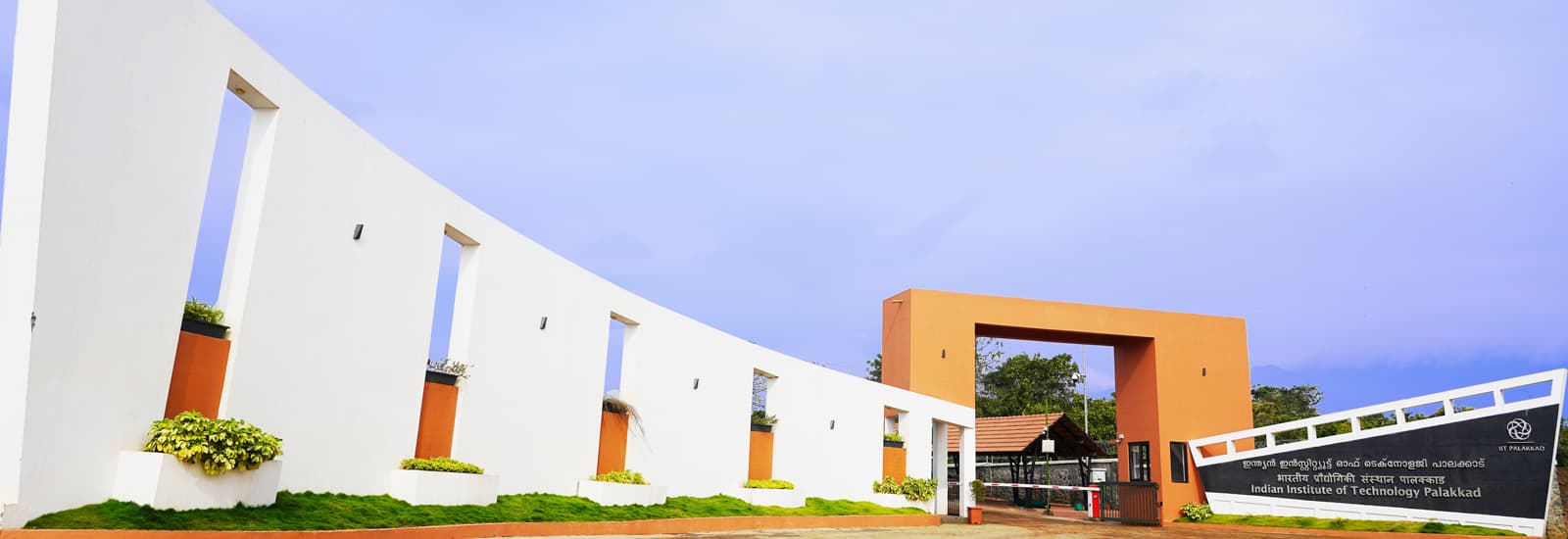
IPTIF is providing a reliable platform for technology based startups and entrepreneurs. This company was established to attract available nationwide potential and harness expertise, fostering class research innovation, technology and product development.
IPTIF
It is known as IIT Palakkad Technology IHub Foundation (IPTIF) and is a Section 8 company established by IIT Palakkad with Rs 100 crore support from the Department of Science and Technology of Government of India.

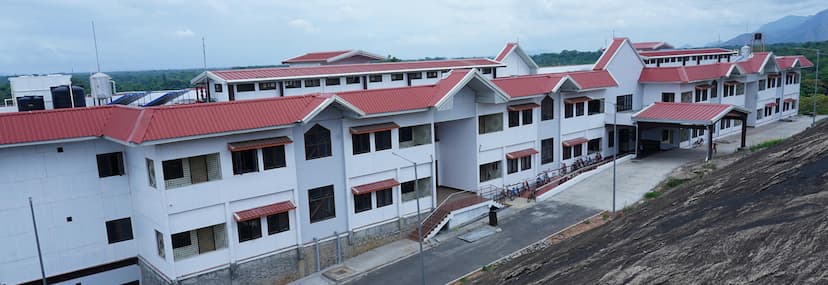
The main aim of i-Skill of IPTIF is to empower the youth of the country with adequate skills to enable their employment in technological sectors, to improve productivity, and capacity building to prepare them for the evolving Cyber-Physical Systems technologies.
Read More – Top 20 colleges in Karnataka
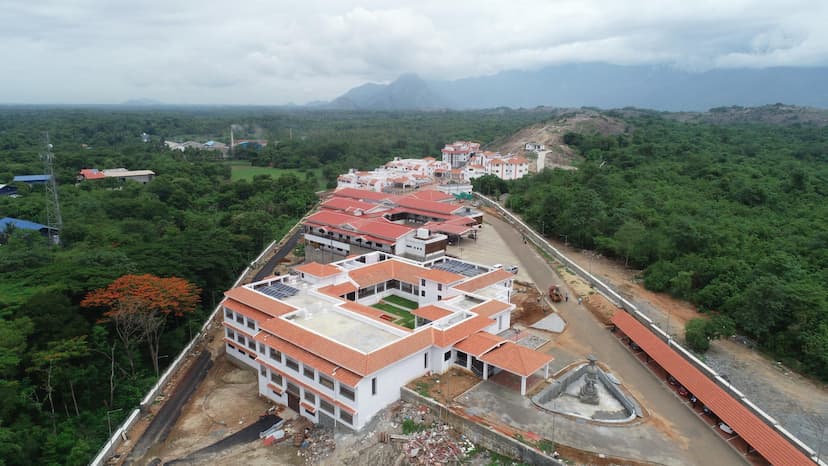

Unique aspects
Dr. Albert Sunny, Director of IPTIF and Project Director at TIH ICS spoke about the unique aspects of i-Skill initiative.
With the evolution of Cyber-Physical Systems technologies globally, India requires interdisciplinary knowledge resources to develop cross-cutting fusion technology resources, said Dr. Albert.
In this context, IPTIF is taking the initiative to prepare the country to solve important problems through technological advances by introducing a pan India initiative aimed at competent resources with a diploma or higher to develop technical skills, said Director.

Also read ‘Know all about how to apply for SGT University admission 2022 which would start sooner’
As part of this initiative, Skill Development Ready Centers (i-SDRC) of IPTIF will be established in Engineering, Arts and Science Colleges besides Industrial Training Institutes across all districts of India to offer state-of-the-art multidisciplinary training and capacity building programs for next-generation technocrats, engineers, and scientists.
To become an i-SDRC, one can send apply through this link ‘https://tinyurl.com/i-SDRC’
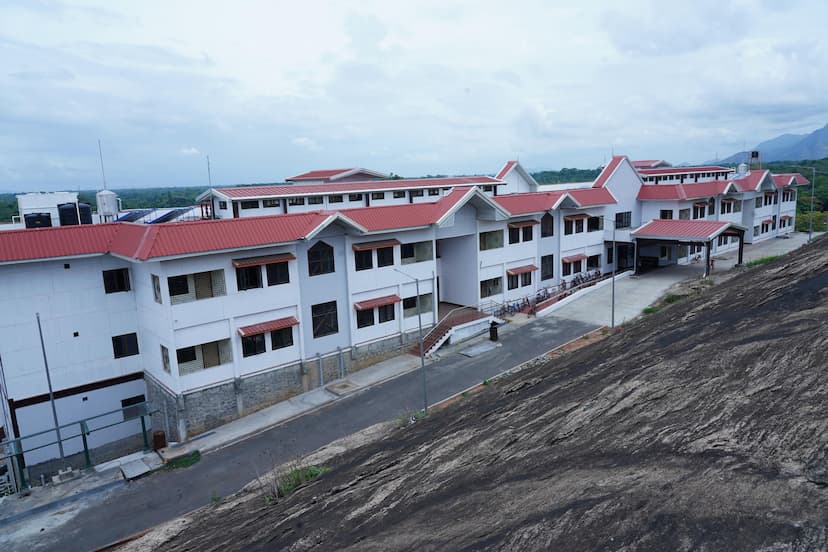

With the evolution of Cyber-Physical Systems (CPS) technologies globally, India requires people with interdisciplinary knowledge in software and hardware development, he said.
‘In this context, IPTIF aims to equip the country’s workforce to meet the demands of the upcoming technological revolution in CPS.’
We also explore and generate equal opportunity to acquire technology-based skills among rural youth and Bridging the digital divide, said General Manager.
Bootcamp
As the inaugural program of the i-Skill initiative. IPTIF is glad to launch a bootcamp on Python for Data Science curated and mentored by Dr Satyajit Das, Assistant Professor, IIT Palakkad.
Python is a world-widely accepted programming language known for its versatility. Hence, it is widely used today in almost every industry, especially in the scientific realm for web development, machine learning, data science, AI, astronomy, robotics, neuroscience, pharmacology, business to name a few.
Python is a fast-growing programming language that is easy to work with and integrate systems more effectively. In addition, it’s extremely scalable and great for prototyping. Most of the world’s largest companies today, such as Google, Netflix, Amazon, and Quora operate on Python.
This boot camp will be covered in 12 hours over a weekend. The training material will include video, audio, PowerPoint presentations and reading materials, among others.
The Python for Data Science course consists of four modules which include context from basics of Python to Data visualization. The course aims to impart substantial knowledge on Python and how to use it effectively for Data Science.
Indian citizen currently residing in India can apply for the camp. Applicants should have graduated 12th/PUC. Preference will be given to those who have completed ITI/Diploma.
For more information, the website of IPTIF can be visited at ‘https://iptif.tech/’ Candidates can send email to ‘office@iptif.tech’ or call on 9188952064.
To register for this boot camp visit https://iptif.tech/IPTIF-B-2021-001. This boot camp will be available only in offline mode at Skill Development Ready Centers (i-SDRC). Upon successful completion, a course completion certificate will be issued by IIT Palakkad Technology IHub Foundation.
The second thrust area of it is Human Resource Development, which includes upskilling job seekers and giving UG and PhD fellowships through open calls in order to improve employability and enable Make-in-India efforts. The third component of it is the development of the startup ecosystem.
IIT Palakkad Technology IHub Foundation engages in activities that create value to the local and national ecosystem.

S Vishnu Sharmaa now works with collegechalo.com in the news team. His work involves writing articles related to the education sector in India with a keen focus on higher education issues. Journalism has always been a passion for him. He has more than 10 years of enriching experience with various media organizations like Eenadu, Webdunia, News Today, Infodea. He also has a strong interest in writing about defence and railway related issues.
Related News

Nagaland University Study Shows How Biochar Can Transform Hill Farming in Northeast India

IITM Pravartak Opens 2026 Registrations for Popular OOBT Maths Course

IIT Madras Launches Three Industry-Powered Centres to Advance Heart Health, Robotic Surgery and Circular Energy

Why Karpagam Academy of Higher Education is a Top Choice for Students

SRMIST Launches Centre for Internet of Things with CDAC Bengaluru to Boost Indigenous Tech Innovation
Tvasta and 14Trees Launch Cedar, India’s AI-Ready 3D Concrete Printer for Global Construction

Author – Ritesh Ranjan: India’s deep-tech and manufacturing ecosystem has received a major boost with the launch of Cedar, an AI-ready 3D concrete printer developed by Tvasta Manufacturing Solutions in partnership with 14Trees. The launch represents an important step forward for construction automation, sustainable building technology and India’s growing role in global advanced manufacturing.
Tvasta, a Chennai-based startup founded by IIT Madras alumni in 2016, has been working at the intersection of robotics, automation and construction 3D printing. With Cedar, the company is now taking its technology to a global stage. The printer has been designed and manufactured in India and is being positioned for deployment across international markets, including the United States, Europe, the Middle East, Asia and Africa.
At a time when the global construction industry is looking for faster, more affordable and more sustainable building methods, Cedar aims to solve some of the biggest challenges faced by developers and contractors. These include high material costs, labour dependency, long project timelines, construction waste and limited access to scalable automation.
A Make in India Innovation for the World
Cedar is more than just a new construction machine. It is a strong example of Make in India moving from research and development into real-world global deployment. Tvasta’s journey began with the goal of using additive manufacturing to transform how buildings and infrastructure are created.
Over the years, construction 3D printing has gained attention because of its potential to reduce build time, improve accuracy and use materials more efficiently. However, widespread adoption has been limited by high machine costs, expensive printing materials and the complexity of deploying large-format printers on actual construction sites.
Cedar has been designed to address these barriers. By combining Indian engineering, AI-based material optimisation and a scalable printing platform, Tvasta and 14Trees are trying to make 3D concrete printing more practical for mainstream construction projects.
What Makes Cedar Different?
One of Cedar’s most important features is its portal-frame architecture. This structure makes the printer suitable for large construction sites and allows it to support projects across residential, commercial, industrial and infrastructure categories.
The printer can reach up to 10 metres in printing height and has an extendable footprint of up to 240 square metres. This gives construction companies the flexibility to use it for different types of projects, including homes, offices, technical facilities, industrial structures and infrastructure components.
Another major advantage is cost. Cedar offers printing volumes comparable to many existing large-format 3D construction printers, but at nearly half the capital investment. This is significant because high upfront cost has often been one of the biggest reasons construction companies hesitate to adopt 3D printing technology.
By reducing the entry barrier, Cedar can help more developers, contractors and public sector agencies explore automated construction.
Printing With Real Concrete
A major breakthrough in Cedar is its ability to print with real concrete instead of relying only on specialised mortar-based mixes. Many construction 3D printers depend on costly mortar materials, which can make projects expensive and limit the use of locally available resources.
Cedar is designed to work with standard concrete formulations. This can reduce material costs by up to 5x, making 3D concrete printing more affordable and practical for large-scale construction.
The ability to use real concrete also improves local adaptability. Construction projects across different countries and regions often depend on materials available nearby. By supporting locally sourced concrete formulations, Cedar can help reduce transportation costs, improve supply chain efficiency and lower the environmental impact of projects.
AI Companion for Smarter Construction
Cedar is not just a hardware platform. It is supported by the 14Trees AI Companion, a digital platform that helps optimise material performance using local resources. The AI Companion analyses thousands of mix designs to help construction teams balance cost, strength and environmental impact.
This is especially important in construction because project conditions vary widely from one region to another. Local materials, climate, humidity, temperature and structural needs can all affect the performance of concrete.
By using AI to recommend and optimise material mixes, Cedar can help contractors achieve more consistent results. It also supports better decision-making by giving teams data-driven insights before and during the construction process.
This combination of robotics and artificial intelligence gives Cedar a clear advantage in real-world deployment. It is not only designed to print structures, but also to help teams understand how to print them efficiently, safely and economically.
Built by Indian Engineering Talent
Tvasta was founded by IIT Madras alumni and has grown into one of India’s most notable startups in the construction 3D printing space. The company has worked on multiple 3D-printed building projects, including housing, educational facilities, offices and technical infrastructure.
The launch of Cedar shows how Indian deep-tech startups are moving beyond prototypes and pilot projects. They are now building industrial-grade solutions that can compete in global markets.
Tvasta CEO Adithya V S has described Cedar as a platform that brings together advanced manufacturing, robotics and software. The goal is to create a system that can perform reliably across different construction environments.
14Trees CEO Francois Perrot has also highlighted the economic side of the technology. According to him, construction 3D printing must not only be technically proven, but must also make financial sense for contractors and developers. Cedar has been designed with that requirement in mind.
Why Cedar Matters for the Construction Industry
The construction industry is under pressure to deliver projects faster, reduce costs and adopt greener methods. Traditional construction often involves long timelines, material wastage, labour shortages and inconsistent quality. Automation can help address many of these issues.
Cedar’s 3D printing technology can reduce construction time by automating repetitive building processes. It can also improve precision, reduce dependency on manual labour and lower material wastage by placing concrete only where needed.
For developers, this means faster project execution and potentially better cost control. For governments and public sector agencies, it could support faster delivery of housing, schools, community facilities and infrastructure. For emerging markets, it offers a more accessible route to advanced construction technology.
The use of AI for material optimisation also supports sustainability. By improving mix designs and reducing waste, Cedar can help construction firms lower their environmental footprint.
Taking Indian Deep-Tech Global
Cedar’s global deployment strategy is one of the most important parts of this launch. The printer is being positioned for markets across the United States, Europe, the Middle East, Asia and Africa.
This is a strong signal that Indian startups are no longer limited to solving domestic challenges. They are creating globally relevant technologies in areas such as robotics, automation, AI and advanced manufacturing.
For India, Cedar reflects the growing maturity of its deep-tech ecosystem. It also shows how institutions like IIT Madras are helping produce founders and engineers who can build globally competitive products.
The partnership between Tvasta and 14Trees brings together Indian engineering and international construction technology expertise. This can help accelerate adoption by offering end-to-end support, including design optimisation, materials development and on-site delivery.
The Future of Automated Construction
As the construction industry evolves, technologies like Cedar could become central to the future of building. Developers and contractors are increasingly looking for solutions that can improve speed, reduce costs and support sustainable development.
Cedar has the potential to serve as a platform for smarter construction. Its ability to print with real concrete, reduce material costs, support large structures and use AI-based optimisation makes it a practical solution for modern construction needs.
While construction 3D printing is still an emerging field, Cedar’s launch marks a significant step toward wider adoption. It brings together the key elements needed for scale: affordability, flexibility, AI support, material compatibility and global deployment readiness.
For Tvasta, this is a major milestone. For India, it is another example of homegrown innovation entering the global stage. For the construction industry, Cedar could become an important tool in the shift toward faster, greener and more automated building methods.
FAQs
1. What is Cedar by Tvasta and 14Trees?
Cedar is an AI-ready 3D concrete printer developed by Tvasta Manufacturing Solutions in partnership with 14Trees. It is designed for large-scale construction automation and global deployment.
2. Why is Cedar important for construction 3D printing?
Cedar reduces the cost barrier for construction 3D printing by offering large-format printing capabilities at lower capital investment. It can also print with real concrete, which helps reduce material costs.
3. What is the printing capacity of Cedar?
Cedar can reach up to 10 metres in printing height and has an extendable footprint of up to 240 square metres, making it suitable for residential, commercial, industrial and infrastructure projects.
4. How does AI help Cedar perform better?
Cedar is supported by the 14Trees AI Companion, which analyses thousands of concrete mix designs. It helps optimise cost, strength and environmental performance using locally available materials.
5. Why is Cedar considered a Make in India success story?
Cedar has been designed and manufactured in India by Tvasta, a startup founded by IIT Madras alumni. Its global deployment plans show how Indian deep-tech innovation can compete in international construction markets.

Related News
Nagaland University Study Shows How Biochar Can Transform Hill Farming in Northeast India
IITM Pravartak Opens 2026 Registrations for Popular OOBT Maths Course
IIT Madras Launches Three Industry-Powered Centres to Advance Heart Health, Robotic Surgery and Circular Energy
Why Karpagam Academy of Higher Education is a Top Choice for Students
SRMIST Launches Centre for Internet of Things with CDAC Bengaluru to Boost Indigenous Tech Innovation
Exam News
NEET UG 2026 Cancelled: NTA Announces Re-Exam After Paper Leak Allegations, CBI Probe Ordered
12 May, 2026
PSEB 10th Result 2026 Today at 12:30 PM: Punjab Board Class 10 Result to Be Declared on May 11
11 May, 2026
JEE Advanced 2026 Admit Card Released: Download City Slip and Hall Ticket at jeeadv.ac.in
11 May, 2026
NEET UG 2026 Result Date: Expected Release, Official Website, Scorecard & What Happens Next
9 May, 2026
Featured News
Pandit Deendayal Upadhyaya Telecom Excellence Awards 2024: Apply by September 30 at awards.gov.in
12 Aug, 2024
Top 20 Management Colleges in Telangana
12 Aug, 2024
Top 20 Colleges for Psychology in India
11 Aug, 2024
Top IITs Launch Future-Proof Courses : New Tech-Savvy Courses in 2024
11 Aug, 2024
Hindenburg Research: A Crucial Study for Commerce Students
10 Aug, 2024
College News
Nagaland University Study Shows How Biochar Can Transform Hill Farming in Northeast India
11 May, 2026
IITM Pravartak Opens 2026 Registrations for Popular OOBT Maths Course
7 May, 2026
IIT Madras Launches Three Industry-Powered Centres to Advance Heart Health, Robotic Surgery and Circular Energy
7 May, 2026
Why Karpagam Academy of Higher Education is a Top Choice for Students
7 May, 2026