

Introduction
Imagine you’re a student in your final year of school, eager for the 2026 admissions session, but wondering whether your future lies in a traditional degree or in acquiring new “digital skills” that the job market demands. With the arrival of the “digital era” and rapid shifts in industry, the relevance of vocational and tech-oriented training is higher than ever. For Indian students, understanding how the government’s major frameworks like the Skill India Mission and Digital India for students are helping build career pathways, upskilling and employability is critical. In this blog post we’ll explore how these initiatives are transforming student careers in 2026, what opportunities they open up, and how you can benefit by aligning your admissions and skill-development strategy with them.
What are the Skill India & Digital India initiatives?
Overview of the Skill India Mission
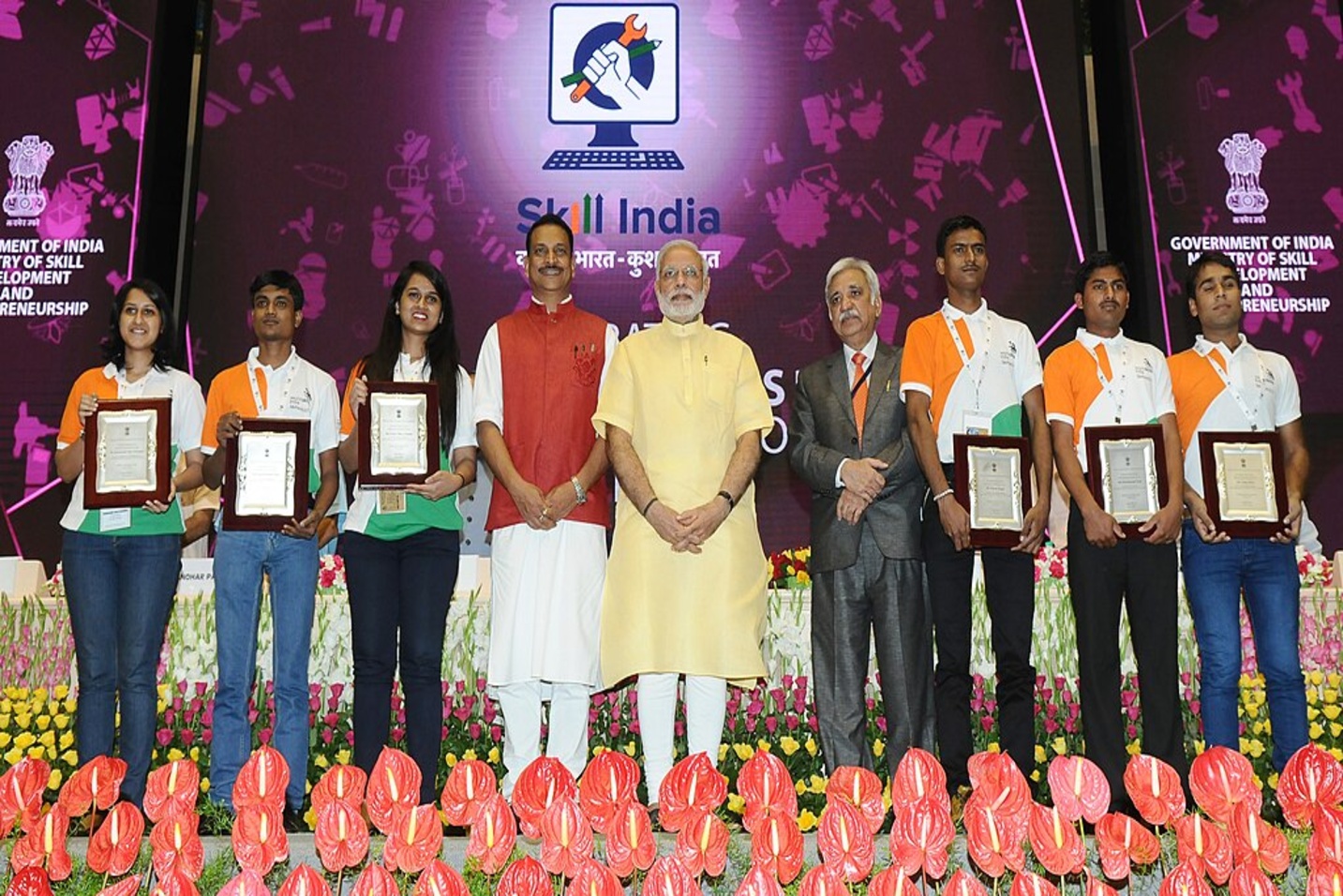
The Skill India Mission launched by the Government of India aims to equip youth with industry-relevant skills, vocational training and certifications that lead to employment.
Key facts:
- A target was set to skill 400 million new and existing workers by 2022 under its umbrella.
- One report says only about 2.3 % of the workforce had formal skills training at one point, showing the challenge ahead.
How Digital India supports digital skills for students
The Digital India programme emphasises digital infrastructure, digital literacy, and digital delivery of services – and for students it means greater access to online learning, digital certifications and connectivity. The combination of Digital India plus Skill India means students today can access remote/online training modules, digital skill courses (like AI, data analytics) and certification paths. For example: The “Skill India Digital Hub” reported registrations of over 60 lakh learners.
Why these initiatives matter for students in 2026
- India has a large youth population and the “demographic dividend” is often discussed — but unless skills match job-market demand, the dividend may be lost.
- According to the latest International Labour Organization (ILO)-style youth employment report, young people face structural challenges converting education into employment.
- For students entering college or skilling in 2026, aligning your choices (college, course, training) with these government initiatives and digital skill trends offers you a head-start.
Major programmes & how they help students
Short-term training and certification programmes
The Skill India Mission offers a range of short-term and long-term training programs designed to make youth employable in emerging sectors such as IT, AI, cloud computing, and digital marketing. These courses are conducted in partnership with industry bodies and training providers.
To explore government-recognized courses, eligibility criteria, and certification details, visit the official Skill India portal — the central hub for India’s skilling ecosystem.
Key highlights:
-
Offers free or subsidized courses under the Pradhan Mantri Kaushal Vikas Yojana (PMKVY).
-
Covers both technical and soft skills demanded by employers.
-
Provides nationally recognized certificates that boost employability across industries.
Alignment with higher education & college admissions
Students who are looking for admissions in 2026 can benefit by choosing colleges or courses that integrate digital skill development or vocational modules. Points to check:
- Does the college offer certificate courses in digital skills (AI, data analytics, IoT) under Skill India/Digital India?
- Does the curriculum have collaborations with government skilling programmes or industry?
- What is the placement record of the college for students with such digital-skill tracks? Use this as a filter in your admission decisions.
Digital literacy & remote learning enabled
Digital India supports remote/online learning, which is especially helpful for students from smaller towns or disadvantaged backgrounds. Benefits:
- Access to MOOCs, skill portals, digital certifications anytime.
- Online exams, remote assessments, digital credentialing: e.g., blended learning models with ITIs.
- Independence to up-skill yourself while attending college or after.
Comparison Table – Traditional College vs Skill-&‐Digital Integrated Path
| Feature | Traditional College Path | Skill-&-Digital Integrated Path |
| Focus | Degree qualification | Skill certification + employment readiness |
| Duration | 3-4 years (B.A/B.Sc/B.Tech etc) | Short-term (months) to 1-2 years + micro-credentials |
| Cost | Tuition + living expenses | Often subsidised/government supported |
| Employability | Depends on curriculum & college brand | Higher relevance if aligned to industry/digital |
| Government scheme linkage | May or may not have | Often linked with programmes like Skill India, Digital India |
| Flexibility | Fixed schedule | More flexible, often online or blended |
| Suitability for 2026 student | Good if traditional field and market demand | Especially good if you want fast entry into digital/tech jobs |
How students can make the most of these initiatives
- Research: Identify which skill courses under Skill India/Digital India are available in your region or college.
- Choose the right course: Pick digital skills that are in demand (data analytics, AI basics, cloud, cybersecurity) as flagged by recent reports.
- Admissions & eligibility: For 2026 session, ensure you meet the eligibility (10 + 2, entrance exams if required) for any integrated vocational/digital programme.
- Check placement & tie-ups: Ask the college or training institute about placement records for digital/skill tracks. Also check partner companies, certifications offered.
- Blend traditional + digital skill: You don’t need to forego a degree – you can pick a college and simultaneously enrol in digital skill certifications to boost your profile for 2026 and beyond.
- Stay updated: These government initiatives evolve (for example, Skill India 2.0 launched new courses in 2025).
Real-world impact & facts for 2026 students
- The youth unemployment rate (age 15-29) has shown a downward trend: e.g., 12.9 % in 2020-21, 10.0 % in 2022-23.
- The India Skills Report 2025 emphasises that digital readiness is critical as sectors like AI, e-commerce and cyber‐security grow.
- Programmes like Generation India’s Project AMBER (co-funded by the World Bank) have certified nearly 24,000 youth, with 65 % placed within three months.
These data show that while challenges remain, digital-skills and government programmes are creating real opportunities — especially for students making decisions now for the 2026 session.
FAQ
What are the best government digital skill programmes for students in India?
You can look at the Skill India Mission’s short-term digital skill courses (AI basics, cloud computing) as part of Skill India 2.0.
How can I ensure a course linked to Digital India improves my placement chances?
Check whether the course is certified, has industry tie-ups, how many students from past batches got placed, and whether it aligns with job-market demand (data analytics, cybersecurity, cloud).
Which college courses integrate digital-skills along with a degree?
Many colleges now offer “B. Tech + digital skill certificate” or “B.Sc + data analytics module”. Check the college’s curriculum, partnerships with government skilling bodies, and placement stats for 2025.
Are the government skilling programmes effective for job-placement?
Effectiveness varies. For example, only about 43 % of youth trained under certain schemes got placements. So students must choose wisely, not just enrol in any programme.
Can traditional degrees become obsolete in this digital-skill era?
No — degrees remain important for foundational knowledge. But degrees alone may not be enough; combining them with digital skill certifications greatly enhances your employability for 2026 and beyond.
Also Check: VIT Admission Process 2026: Complete Step-by-Step Guide
Conclusion
In summary, as a student planning for admissions in 2026, leveraging the synergies of Skill India and Digital India can significantly enhance your career readiness. These government career programmes open up pathways to digital-skills, certifications, and employment-linked training that complement your college education. Don’t wait — evaluate your college/course options, enrol in relevant digital skill modules, and take the next step to build a future-proof career. Apply through CollegeChalo for expert guidance or stay tuned for updates on upcoming admission deadlines and skill-training opportunities.