

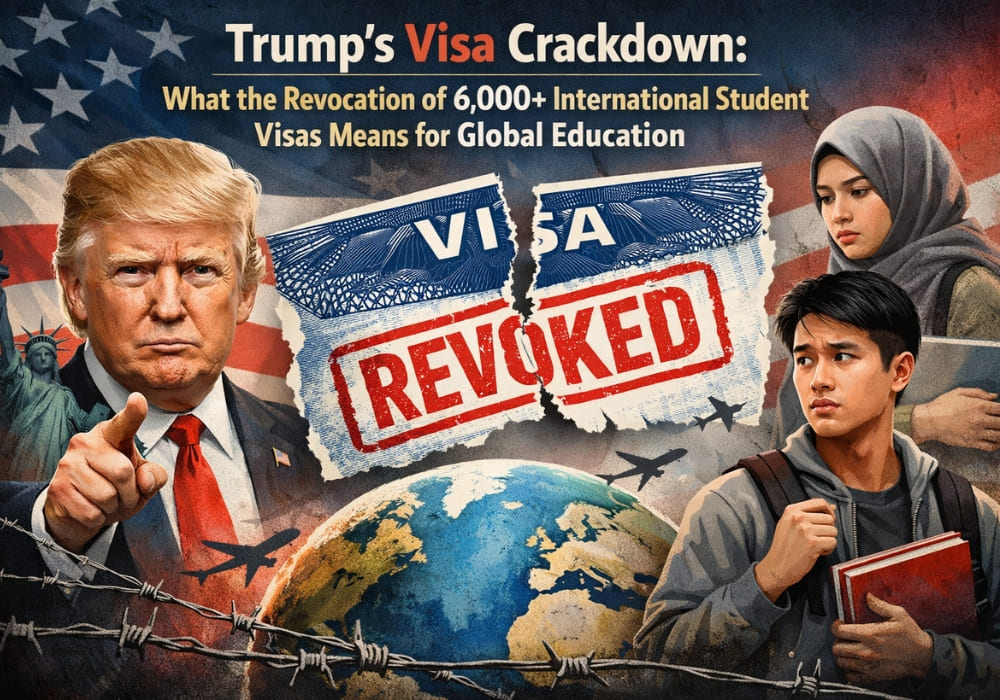
Author – Ritesh Ranjan: The United States has long been a top destination for international students, offering world-class education, research opportunities, and career pathways. However, recent developments under the administration of Donald Trump have raised serious concerns across academic and global communities. Reports indicate that more than 6,000 international student visas—primarily F-1 visas—have been revoked since January, sparking debate around national security, free speech, and the future of studying in the U.S.
This sweeping action, supported by U.S. Secretary of State Marco Rubio, is being framed as part of a broader immigration crackdown targeting crime, terrorism, and campus unrest. But critics argue it could have far-reaching consequences beyond its stated goals.
Understanding the Visa Revocations
According to State Department sources, over 6,000 student visas have been revoked in recent months. The reasons cited include:
- Criminal offenses such as assault, DUI, and burglary
- Alleged links to “terrorism support”
- Participation in protests deemed disruptive or politically sensitive
A particularly controversial aspect is the classification of certain pro-Palestine protests as potential “terror support.” Around 200–300 cases reportedly fall under this category, raising alarms among civil rights groups.
Rubio has stated that this is just the beginning, emphasizing that more action is expected against what he termed “campus disruptors.”
Policy Timeline: A Rapid Escalation
The crackdown has unfolded quickly over the past several months:
- January: Rubio announces plans to revoke “thousands” of visas
- Spring: Over 300 student activists reportedly targeted
- May: Temporary halt on visa interviews
- June: Interviews resume with stricter vetting, including mandatory social media checks
New applicants are now required to undergo enhanced scrutiny, particularly for online activity that may indicate “hostility toward the United States.”
The “Terror Support” Debate
One of the most contentious elements of the policy is the broad interpretation of terrorism under U.S. immigration law. The Immigration and Nationality Act (INA) allows authorities to deny or revoke visas based on perceived support for terrorist organizations.
Critics argue that:
- Peaceful protests are being misclassified
- Political expression is being conflated with extremism
- There is little transparency or evidence in many cases
This has created a chilling effect, with many international students now hesitant to engage in political discussions or activism on campus.
Impact on International Students
The implications of these actions are significant and far-reaching.
1. Rising Deportations
Students whose visas are revoked may face immediate deportation, often with limited opportunity to appeal. This disrupts education, finances, and long-term career plans.
2. Fear and Uncertainty
International students are increasingly cautious about:
- Attending protests
- Posting opinions online
- Engaging in political discourse
3. SEVIS Compliance Pressure
Students must strictly maintain their status in the Student and Exchange Visitor Information System (SEVIS). Even minor violations could now carry greater risks.
Enrollment Trends: A Warning Sign
The crackdown comes at a time when international student numbers are already showing mixed trends.
According to Open Doors 2024/25 data:
- Total international students: 1.13 million (+7% YoY)
- New enrollments: Down 7%
- Graduate enrollments: Down 15%
- Undergraduate enrollments: Up 5%
Students from China and India continue to dominate, accounting for nearly 50% of all international enrollments. However, the decline in graduate students signals growing hesitation among prospective applicants.
OPT Surge: A Shift in Priorities
Optional Practical Training (OPT), which allows international students to work in the U.S. after graduation, has seen a record increase.
Why?
- Students are prioritizing work experience before potential policy changes
- OPT is viewed as a “safer” route compared to long-term academic commitments
- It offers a fallback amid visa uncertainty
Social Media Screening: A New Normal
One of the most impactful changes is the mandatory review of applicants’ social media profiles.
Authorities are now checking for:
- Links to extremist groups
- Anti-U.S. sentiment
- Content interpreted as antisemitic or supportive of terrorism
This has led to widespread concern about privacy and freedom of expression. Students are increasingly curating—or even deleting—their online presence to avoid complications.
Political Reactions: A Divided Response
Critics (Democrats & Civil Rights Groups)
- Label the policy as an “attack on due process”
- Argue that students are being punished without clear evidence
- Warn of long-term damage to U.S. academic reputation
Administration’s Defense
- Frames the crackdown as essential for national security
- Emphasizes removing “bad actors” from campuses
- Maintains that visa holders are “guests” who must follow strict rules
What This Means for Future Applicants
If the current trajectory continues, students planning to study in the U.S. in 2026 and beyond should prepare for:
- More rigorous background checks
- Increased scrutiny of online activity
- Longer visa processing times
- Higher rejection risks
Practical Advice for International Students
To navigate this evolving landscape, students should take proactive steps:
1. Maintain Visa Compliance
Ensure all academic and legal requirements are met, including full-time enrollment and valid documentation.
2. Be Mindful of Online Activity
Avoid posting content that could be misinterpreted under current policies.
3. Stay Updated on SEVIS
Regularly check your SEVIS status and coordinate with your institution’s international office.
4. Limit Risk Exposure
Be cautious about participating in protests or politically sensitive activities.
5. Seek Legal Guidance
If faced with visa issues, consult an immigration attorney immediately.
The Bigger Picture: Is the U.S. Losing Its Edge?
The U.S. has historically benefited from international students, who contribute billions to the economy and enrich academic environments. However, policies perceived as restrictive or unpredictable could push students toward alternative destinations such as Canada, the UK, or Australia.
Universities are already expressing concern about declining enrollments and the potential loss of global talent.
Conclusion
The revocation of over 6,000 international student visas marks a significant shift in U.S. immigration and education policy. While the administration emphasizes national security, the broader impact on students, universities, and global perception cannot be ignored.
As the situation evolves, international students must remain vigilant, informed, and prepared to adapt. The future of studying in the United States may depend not only on academic merit—but increasingly on compliance, caution, and context.
FAQs
1. Why are international student visas being revoked in the U.S.?
Visa revocations are primarily linked to criminal activity, alleged terrorism support, and participation in protests considered disruptive or politically sensitive.
2. Can students appeal a visa revocation?
In many cases, appeals are limited or time-sensitive. Students are advised to seek immediate legal assistance if their visa is revoked.
3. How does social media affect visa approval?
U.S. authorities now review applicants’ public social media profiles for content that may indicate extremism or hostility toward the U.S.
4. Are all international students at risk?
Not all students are directly affected, but increased scrutiny means everyone must be more cautious about compliance and online behavior.
5. Will this impact future international student enrollment?
Yes, stricter policies and uncertainty may discourage students from choosing the U.S., potentially leading to declining enrollment in the coming years.