

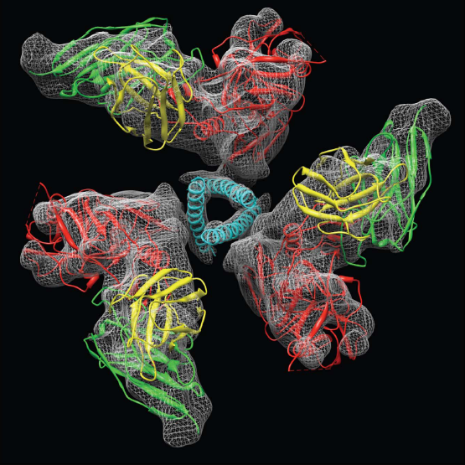
IIT Madras researchers developed algorithms to detect disease causing dysfunctional proteins and genes in biological networks.
The researchers at IIT Madras also hope to develop detailed maps of tissue and disease specific networks in future that can help in better understanding of the connections among genes, proteins and diseases, and thus contribute towards the cutting-edge field of disease network biology.
 ITT Madras research team was led by Professor B. Ravindran, Head, Robert Bosch Centre for Data Science and Artificial Intelligence, (RBC DSAI), IIT Madras, Dr. Karthik Raman and Dr. Himanshu Sinha, Faculty Members, RBC DSAI, IIT Madras, and Coordinators, Initiative for Biological Systems Engineering (IBSE), IIT Madras.
IIT Madras: Great, Algorithms to detect proteins
The IIT Madras team comprehensively analysed existing module identification algorithms and developed an improved system that achieved 50% performance improvement in identifying disease-relevant modules over existing approaches.
The team hopes to develop detailed maps of tissue- and disease-specific networks in future that can help in better understanding of the connections among genes, proteins and diseases, and thus contribute towards the cutting-edge field of disease network biology.
Their recent work was conducted as part of the DREAM Challenge, an open science approach involving researchers from industry, academia and non-profit organizations throughout the world.
The results have recently been published in Frontiers in Genetics and have been included in a compendium paper that has been published by the DREAM Challenge Consortium in the prestigious peer-review journal Nature Methods.
Also Read – PUCET UG 2020 Application last date extended
These papers have been co-authored by the above researchers with Professor Srinivasan Parthasarathy, Department of Computer Science and Engineering and Department of Biomedical Informatics, Ohio State University, who is also a VAJRA (Visiting Advanced Joint Research) visiting professor at IIT Madras and Research Student Ms. Beethika Tripathi.
Speaking more about the research, Dr Ravindran said All biological processes are a result of complex interactions among genes and proteins, and diseases are often caused by perturbations in them.
Genes are seldom isolated and occur as connected groups called disease modules. The ability to identify and automatically extract these modules can help in understanding the root causes of several diseases and the functional roles of different protein/genetic modules in disease, he said.
Using the ‘overlapping’ community detection algorithms, the team has successfully shown overlaps in disease modules in related diseases. ‘We know from real life that diabetes, cardiovascular problems and cholesterol issues are interrelated; our algorithm captures the link.’
Dr. Karthik Raman said one of their algorithms ranked fifth in one of the challenge categories. Our team refined the algorithm further and now it is comparable to the one that won the first place in the challenge and even better in terms of the ‘hit ratio’ than the winner.
Given that several genes participate in multiple biological functions, it is important that the algorithms consider module overlaps. This is what we have done in our algorithm, said Himanshu Sinha.
The international DREAM challenge, run by a community of researchers from a variety of organizations, encourages researchers from all over the world to solve fundamental biomedical problems.
One of the recent DREAM challenges was the development of algorithms to extract disease modules from six different networks of proteins/genes. This challenge was taken up by 400 participants from all over the world, including the IIT Madras team.
About IIT Madras
Indian Institute of Technology Madras (IIT Madras) was established in 1959 by the Government of India as an institute of national importance.
The activities of the Institute in various fields of Technology and Science are carried out in 16 academic departments and several advanced interdisciplinary Research Academic Centres.
The Institute offers undergraduate and post – graduate programmes leading to the B.Tech., M.Sc., M.B.A., M.Tech., M.S., and Ph.D., degrees in a variety of specialisations.
IITM is a residential institute with more than 580 faculty and 9,500 students. Students from 18 countries are enrolled here. IITM fosters an active entrepreneurial culture with strong curricular support and through the IITM Incubation Cell.