

Introduction
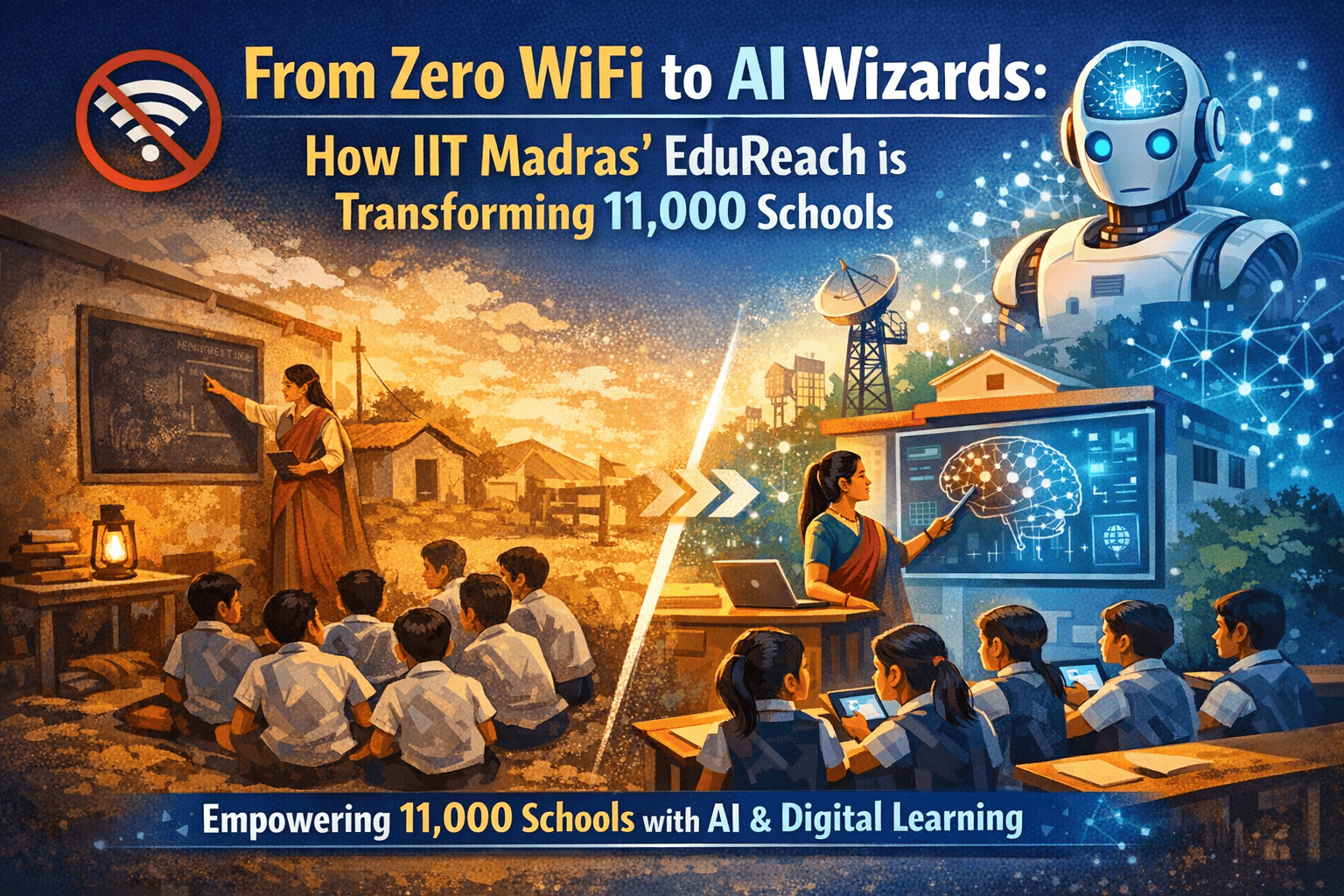
Imagine a rural classroom with limited infrastructure suddenly turning into a smart learning hub powered by Artificial Intelligence. No expensive devices. No high-speed internet. Just simple, scalable technology transforming how students learn and teachers teach.
This is no longer a vision—it’s reality, thanks to EduReach, an innovative edtech initiative by IIT Madras. Designed to bridge India’s digital divide, EduReach is set to empower 11,000 schools and over 11 lakh students by the end of the year.
In a country where access to quality education remains uneven, EduReach offers a powerful blueprint aligned with NEP 2020, bringing AI-driven learning tools directly into classrooms that need them the most.
EduReach: AI-Powered Learning for Every Classroom
EduReach is developed by IIT Madras’ Wadhwani School of Data Science and AI (WSAI) as a modular, open-source edtech toolkit. Unlike traditional platforms that require heavy infrastructure, EduReach is designed specifically for resource-constrained schools.
Instead of a one-size-fits-all solution, EduReach provides customizable modules that schools can adopt based on their needs:
- Automated assessment tools for quizzes and evaluations
- Real-time analytics dashboards tracking student performance
- Offline question banks for low-connectivity environments
- Video-integrated assessments for interactive learning
- Role-based access for teachers, administrators, and policymakers
This flexible approach ensures that even schools with minimal digital infrastructure can benefit from advanced AI capabilities.
Transforming Tamil Nadu’s Classrooms
EduReach has already demonstrated its impact in Tamil Nadu, where it supported 3,860 smart classrooms. In just one year, the platform enabled weekly evaluations for 19 lakh students, helping educators track performance more effectively.
Teachers can now:
- Generate instant quizzes
- Monitor student progress in real time
- Identify learning gaps quickly
- Reduce manual workload
Students, on the other hand, experience a more engaging and interactive learning environment, driven by AI-based assessments and insights.
Scaling Up: 11,000 Schools by Year-End
Currently deployed in 250 schools across two states, EduReach is rapidly scaling. The collaboration with Vidya Shakti, another IIT Madras initiative, is accelerating its nationwide rollout.
The goal is ambitious yet achievable:
- 11,000 schools onboarded
- 11 lakh students impacted
- Full integration of AI-powered tools in public education systems
Vidya Shakti complements EduReach by providing low-cost hardware solutions, ensuring that even schools without proper infrastructure can adopt digital learning.
Bridging India’s Digital Divide
India’s education system faces a significant challenge—over 60% of rural schools lack basic digital infrastructure, according to recent reports. EduReach directly addresses this gap by offering:
- Offline functionality for low-connectivity areas
- Cost-effective implementation
- Scalable deployment across government schools
This makes it a practical solution for large-scale adoption, unlike many high-cost edtech platforms that remain inaccessible to underserved communities.
Why EduReach Stands Out in the Edtech Market
India’s edtech industry is projected to cross ₹10,000 crore by 2026. However, most platforms cater to urban, well-connected users. EduReach disrupts this model with its inclusive and open-source approach.
Key Advantages:
- Zero-cost or low-cost implementation
- Open-source flexibility
- AI-driven insights for better decision-making
- Alignment with NEP 2020 goals
- Scalability for government education systems
By reducing costs by nearly 70% compared to proprietary platforms, EduReach makes AI-powered education accessible to all.
Backed by Strong Institutional Support
EduReach is supported by:
- Ministry of Education’s Centre of Excellence (Bodhan AI)
- BACI CSR initiatives
- IIT Madras’ WSAI ecosystem
Experts behind the project emphasize its long-term impact. The platform not only enhances learning but also enables data-driven governance, allowing policymakers to identify gaps and improve educational outcomes at district and state levels.
What’s Next for EduReach?
The future roadmap for EduReach includes advanced AI capabilities such as:
- AI-based question generation
- Personalized feedback systems
- Adaptive learning pathways
- Enhanced analytics for policy decisions
Workshops and training programs are also being planned to help educators and administrators fully leverage the platform.
Conclusion: A New Era of Inclusive Education
EduReach is more than just an edtech tool—it’s a movement toward democratizing education in India. By bringing AI into classrooms that previously lacked even basic digital tools, IIT Madras is proving that technology can truly serve the masses.
As India moves toward 100% digital literacy by 2030, initiatives like EduReach will play a crucial role in ensuring no student is left behind.
For educators, policymakers, and institutions, this is a call to action:
Adopt, adapt, and scale AI-driven learning for a smarter, more inclusive future.
FAQs
1. What is EduReach by IIT Madras?
EduReach is an open-source, AI-powered edtech platform developed by IIT Madras to provide digital learning tools for schools with limited infrastructure.
2. How many schools will benefit from EduReach?
EduReach aims to impact 11,000 schools and over 11 lakh students across India by the end of the year.
3. Does EduReach require internet connectivity?
No, EduReach includes offline features such as question banks and assessments, making it suitable for low-connectivity areas.
4. How does EduReach support teachers?
It helps teachers by automating quizzes, providing real-time analytics, reducing manual workload, and identifying student learning gaps.
5. Is EduReach aligned with NEP 2020?
Yes, EduReach supports NEP 2020 goals by promoting digital learning, AI integration, and equitable access to education across India.