

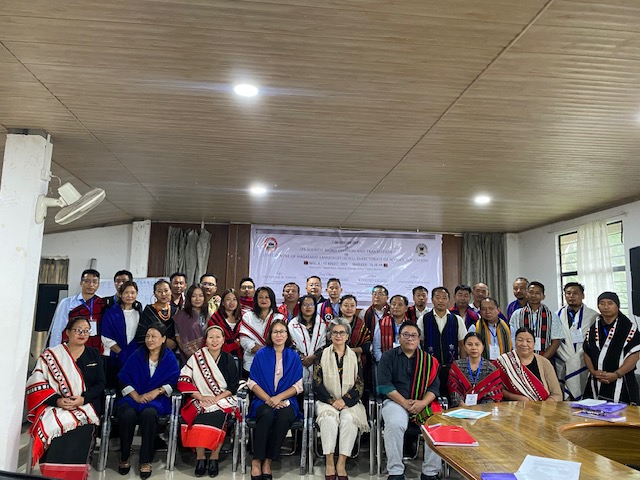
Nagaland University is partnering with the Directorate of School Education, Government of Nagaland, to spearhead a landmark initiative to develop written grammar for the 18 recognised languages of Nagaland.
The project seeks to provide structured pedagogical grammars for inclusion in school textbooks from Class 5 to Class 12, ensuring alignment with the National Education Policy (NEP) 2020.
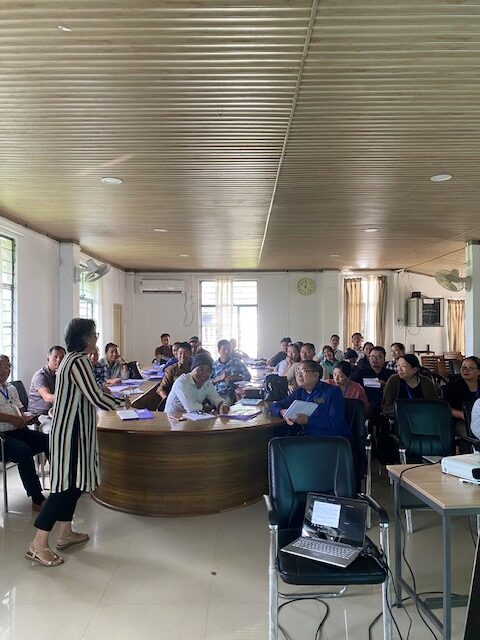 Naga Languages
While Naga languages have been taught in schools for decades, none have had dedicated written grammars for the teaching-learning process, say sources from Nagaland University.
This initiative addresses the gap by systematically documenting grammar—including parts of speech, tense and aspect, phrase and clause structures, and tone —while enriching vocabulary and clarifying orthography where needed.
NEP 2020 vision
This long-term effort not only strengthens NEP 2020’s vision of multilingual education but also addresses the risks of language marginalisation by ensuring each Naga language is valued as much as dominant languages.
Nagaland Board of School Education
The grammar developed under this initiative will be incorporated into school textbooks alongside prose, poetry, and translation, under the supervision of State Council of Educational Research and Training (SCERT) and Nagaland Board of School Education (NBSE).
Teacher training programmes are planned to support the smooth integration of grammar teaching in classrooms, beginning with refresher courses hosted by Nagaland University.
Department of Tenyidie at Nagaland University
The project is led by Dr. Mimi Kevichüsa Ezung, Associate Professor and Head, Department of Tenyidie, Nagaland University.
Tenyidie is the standardised form of the Angami language spoken by the Angami community of Nagaland as well as the speech community of nine other tribes, which collectively fall under the Tenyimia Group.
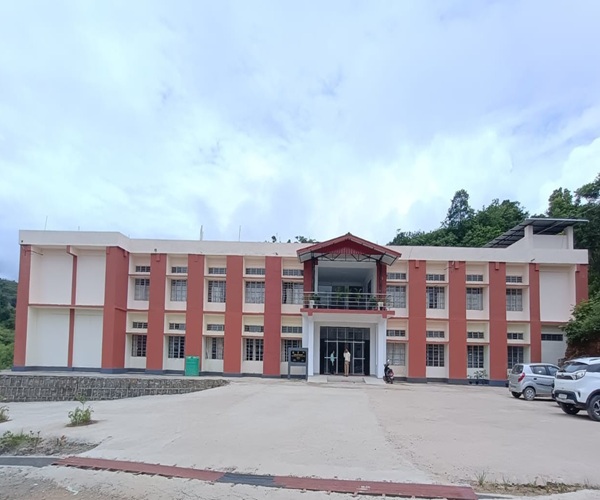 Vice Chancellor of Nagaland University
Prof. Jagadish K Patnaik, Vice Chancellor, Nagaland University, said, “It gives me great pleasure to announce that the Department of Tenyidie, Nagaland University, has taken the lead in a historic initiative to develop grammar resources for the 18 State-recognised languages of Nagaland for inclusion in school textbooks.
This endeavour is not merely an academic exercise but a cultural mission – one that seeks to preserve, strengthen, and promote the linguistic heritage of our people, said Vice Chancellor.
Vice Chancellor of Nagaland University further added that this initiative would not have been possible without the dedication of the faculty, scholars, language experts and community elders who have worked together in a spirit of collaboration.
It is also a step towards fulfilling the vision of the National Education Policy 2020, which emphasizes education in the mother tongue, and the preservation of India’s rich linguistic diversity, he said.
Nagaland University, through its Tenyidie Department, remains committed to being at the forefront of knowledge creation, cultural preservation and Nation building, he said.
Cultural significance
Dr. Mimi Kevichüsa Ezung, Associate Professor and Head, Department of Tenyidie, Nagaland University, said, the two main components of language are vocabulary and grammar.
A written grammar is a formal representation of the abstract properties of a language, said Dr Mimi Kevichusa.
‘At a time when Naga languages are undergoing standardisation, developing pedagogical grammars is crucial.’
‘It ensures consistency and regularity in writing and in speech, while instilling pride in one’s mother tongue.’
This initiative is not just about textbooks but it is also about preserving identity, culture, and indigenous knowledge, said Dr Mimi.
Collaborative project
The project is collaborative in nature, involving multiple stakeholders:
Ø Language Literature Boards, which help in the selection of a language variety to be standardised, coin new words, and oversee textbooks for Classes 9–12.
Ø State Centre of Naga Languages (SCNL), under the Directorate of School Education, which develops textbooks for Classes 1–8 and works closely with Literature Boards for translation, proofreading, and final approval.
Ø State Council of Educational Research and Training (SCERT), and Nagaland Board of School Education (NBSE), which integrate grammar into the official curriculum.
Technical workshops, held at Nagaland University’s Department of Tenyidie, are equipping language officers under the SCNL with the tools to translate and document grammatical categories into their respective languages.
School Education Department of Nagaland
Ms. Kevileno Angami, Commissioner and Secretary, Department of School Education and SCERT, Government of Nagaland, said workshops on grammar conducted by Nagaland University have provided valuable insights into the structure of Naga languages.
Teaching grammar from the early stages will give clarity, prevent confusion, and build a strong foundation in our students’ language education, she said.
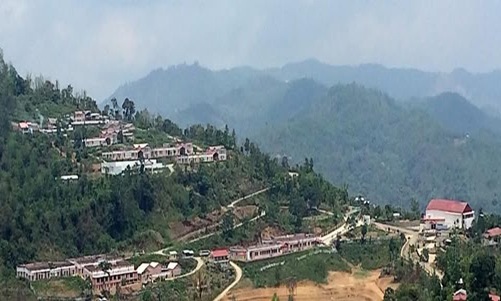 Languages covered
The 18 languages covered under this programme include Ao, Chang, Chokri, Khiamniungan, Konyak, Kuki, Kuzhale (Khezha), Liangmai, Lotha, Nthenyi (Southern Rengma), Nzonkhwe (Northern Rengma), Phom, Pochury, Sangtam, Sümi, Tenyidie (Angami), Yimkhiung, and Zeme, say sources from Nagaland University.
Currently, only a few languages—such as Tenyidie, Ao, Lotha, and Sümi—are taught beyond Class 8, with Tenyidie being offered up to M.A. and Ph.D. level.
This grammar-writing initiative will lay the foundation for expanding other languages to higher levels of education.
Also Read – Top 5 MArch Colleges in India