If you’re dreaming of studying Computer Science, AI, or Electronics at one of Delhi’s top engineering universities, NSUT Admission 2026 is probably already on your radar. Netaji Subhas University of Technology (NSUT) — formerly known as NSIT — consistently ranks among the most sought-after government engineering institutes in North India, right alongside DTU.
But here’s the catch: NSUT doesn’t run its own separate entrance exam or independent application process for B.Tech admissions. Everything flows through JEE Main and the JAC Delhi centralized counselling system. If you don’t understand this process clearly, it’s easy to miss deadlines, fill choices incorrectly, or lose a seat you were actually eligible for.

In this guide, you’ll learn everything about NSUT Admission 2026 — eligibility criteria, the role of JEE Main, the JAC Delhi counselling timeline, seat quotas, document requirements, common mistakes applicants make, and practical tips to improve your chances of landing your preferred branch.
Table of Contents
- What Is NSUT and Why It Matters
- NSUT Admission 2026: Quick Overview
- Eligibility Criteria for NSUT Admission 2026
- Entrance Exam: How JEE Main Decides Your Seat
- NSUT Admission 2026 Important Dates
- Step-by-Step Selection Process (JAC Delhi Counselling)
- Seat Reservation and Quota Breakdown
- Documents Required for Verification
- NSUT Cutoff Trends 2026
- Tips and Best Practices for Better Counselling Outcomes
- Common Mistakes Applicants Make
- Latest Updates and Trends
- Key Takeaways
- Conclusion
- FAQs
What Is NSUT and Why It Matters
NSUT (Netaji Subhas University of Technology) is a state government university located in Dwarka, New Delhi, with an additional East Campus (formerly Ambedkar Institute). It offers B.Tech programmes in Computer Science Engineering, Artificial Intelligence, Information Technology, Electronics & Communication, Electrical Engineering, Mechanical Engineering, Mathematics & Computing, and more.
What makes NSUT attractive to engineering aspirants is its strong placement record. Recent batches have reported average packages in the range of ₹18–19 LPA, with top offers crossing ₹1 crore per annum, especially in computing and electronics branches. That kind of outcome makes NSUT a genuine alternative to older NITs for students with strong JEE Main ranks who want to stay closer to Delhi.
NSUT Admission 2026: Quick Overview
| Particular |
Details |
| Conducting Body |
Joint Admission Counselling (JAC) Delhi |
| Entrance Exam |
JEE Main 2026 (Paper 1 for B.Tech, Paper 2 for B.Arch) |
| Application Mode |
Online, via jacdelhi.admissions.nic.in |
| Counselling Rounds |
4 regular rounds + Upgradation Round + Spot Round |
| Seat Quota |
85% Home State (Delhi) + 15% Other State |
| Registration Fee |
₹1,500 (non-refundable, plus transaction charges) |
Eligibility Criteria for NSUT Admission 2026
Before you register, make sure you tick every box below. Eligibility is checked twice — once during JAC Delhi registration and again physically at the time of document verification at NSUT.

- You must have passed Class 12 (or an equivalent examination) with Physics and Mathematics as compulsory subjects, along with Chemistry, Biology, or a technical vocational subject as the third subject.
- General category candidates need a minimum of 60% aggregate marks in Physics, Chemistry, and Mathematics (PCM) combined, or must be among the top 20 percentile of their respective board.
- Reserved category candidates (SC/ST/OBC-NCL/EWS/PwBD) get a relaxation in the minimum qualifying marks, as notified by JAC Delhi each year.
Entrance Exam Eligibility
- A valid JEE Main 2026 score is mandatory. NSUT does not accept any other entrance exam (like BITSAT or state CETs) for B.Tech admission.
- For B.Arch at NSUT, JEE Main Paper 2 (B.Arch) is used instead.
Age and Domicile

- There’s no upper age limit for NSUT admission.
- Domicile isn’t compulsory to apply, but it directly affects which quota (Home State or Other State) you’re evaluated under — more on this below.
Entrance Exam: How JEE Main Decides Your Seat
NSUT does not conduct its own entrance test. Instead, your JEE Main 2026 All India Rank (CRL) becomes the single most important number in your admission journey. Here’s how it works practically:
- JEE Main is usually held in two sessions (January and April). Your best score across both attempts is considered for the final rank.
- This rank is then used by JAC Delhi to allot seats — not just at NSUT, but also DTU, IGDTUW, and DSEU. IIIT-Delhi uses JEE Main percentile plus bonus points instead of the plain CRL rank.
- B.Arch admission at NSUT uses JEE Main Paper 2 rank, not Paper 1.
Practical example: Suppose you scored an All India Rank of 5,500 in JEE Main 2026 General category, and you’re a Delhi-region candidate. Based on recent trends, that rank could realistically land you into NSUT’s Information Technology or Mathematics & Computing branch under the Home State quota, though Computer Science Engineering (CSE) would likely need a rank closer to 4,800–8,200 in the HS category.
NSUT Admission 2026 Important Dates
The NSUT Admission 2026 cycle, run through JAC Delhi, followed this broad schedule:
| Event |
Date |
| JAC Delhi registration & choice filling opens |
May 28, 2026 |
| Last date for registration and choice filling |
June 9, 2026, 11:30 PM |
| Additional registration/editing window |
June 26–28, 2026 |
| Seat allotment rounds (Round 1 to Round 4) |
June–July 2026 |
| Upgradation Round result |
Late July 2026 |
| Spot Round (physical reporting, vacant seats) |
Late July–August 2026 |
| Document verification & reporting at NSUT |
Within each round’s specified window |
Dates for each admission cycle shift slightly depending on when JEE Main results are declared, so always cross-check the live schedule on jacdelhi.admissions.nic.in before your session begins. If you’re planning for the next intake (2027 session), expect a similar pattern: registration typically opens in the last week of May, roughly 3–4 weeks after JEE Main April session results.

Step-by-Step Selection Process (JAC Delhi Counselling)
Here’s exactly how the process unfolds, from registration to admission confirmation:
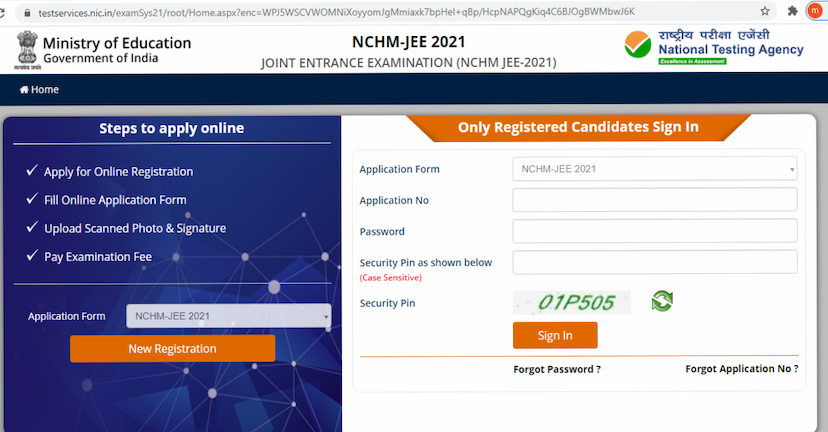
- Register on the JAC Delhi portal using your JEE Main application number and password — your rank and category details auto-populate.
- Fill the online application form with personal, academic, and category information, and upload your photograph and signature.
- Pay the registration fee of ₹1,500 (non-refundable) through UPI, net banking, or card.
- Fill and lock your choices — list your preferred institute-branch combinations in order of priority. This step decides everything, so take your time.
- Wait for seat allotment — JAC Delhi runs up to 4 regular rounds based on rank, category, and choices filled.
- Accept the seat and pay the seat acceptance fee within the given deadline if you’re satisfied with the allotment, or choose “float/upgrade” to stay in the running for a better option in later rounds.
- Report for document verification physically or online, as specified, at NSUT.
- Attend the Spot Round (if applicable) for any vacant seats remaining after the regular and upgradation rounds — this involves in-person reporting with a demand draft.
There is no interview, group discussion, or personal statement involved anywhere in this process. Selection is purely rank and merit-based.
Seat Reservation and Quota Breakdown
Understanding the quota system is critical because it changes your effective competition pool:
- Home State (HS) Quota — 85% seats: Reserved for candidates who studied Class 11 and 12 from a school located within Delhi NCT.
- Other State (OS) Quota — 15% seats: Open to candidates from anywhere in India, regardless of domicile.
- Category reservations follow Delhi government norms: SC, ST, OBC-NCL, EWS, and PwBD, applied within both HS and OS pools.
- Supernumerary seats exist for Kashmiri Migrants (1 extra seat per programme) and Single Girl Child candidates (additional seats at select institutes).
A common misconception is that OS quota is “easier” because it’s smaller — it’s actually the opposite. Since only 15% of seats are open to all of India, the OS quota tends to close at tighter (lower) ranks than the HS quota for the same branch.
Documents Required for Verification
Keep scanned and physical copies of the following ready well in advance:
- JEE Main 2026 admit card and rank card
- Class 10 and Class 12 mark sheets and passing certificates
- Category certificate (SC/ST/OBC-NCL/EWS), if applicable
- Domicile/residence proof (for Home State quota claim)
- Passport-size photograph and signature (as per portal specifications)
- Seat allotment letter
- Aadhaar card or any valid government photo ID
Missing even one document during physical reporting can delay or, in some cases, cancel your seat allotment — so don’t leave this for the last day.
NSUT Cutoff Trends 2026
Cutoffs shift every year based on the number of applicants, seat matrix, and difficulty of JEE Main. Based on 2025 closing ranks and early 2026 trends:
- B.Tech CSE (General, OS quota): roughly 2,500–4,600
- B.Tech CSE (General, HS quota): roughly 4,800–8,200
- B.Tech Artificial Intelligence: closes among the tightest ranks, often below CSE
- B.Tech IT, Data Science, Maths & Computing: roughly 3,100–7,500 (OS) and 6,800–17,200 (HS)
- ECE, Electrical, Mechanical: wider range, roughly 18,000–51,000 depending on round and category
These numbers are indicative, not guaranteed — always verify the latest opening/closing ranks on the official JAC Delhi portal’s OR-CR (Opening Rank–Closing Rank) section after each round.
Tips and Best Practices for Better Counselling Outcomes
- Fill more choices, not fewer. Many students lock only 5–6 options and end up with no seat. Fill every combination you’d genuinely accept.
- Order choices by real preference, not “safety first.” JAC Delhi allotment logic rewards candidates who rank their true preference first — you can always float or upgrade later.
- Use last year’s OR-CR data as a reference, not a guarantee. Cutoffs can move by a few thousand ranks year to year.
- Don’t skip the “float” vs “freeze” decision. If you’re not sure, floating keeps you eligible for a better branch in the next round, but you risk losing the current allotment if you don’t respond in time.
- Track the Upgradation and Spot Rounds closely — a meaningful number of seats open up here as higher-rank candidates migrate to IITs or other options after JEE Advanced results.
Common Mistakes Applicants Make
- Missing the choice-locking deadline — unlocked choices get auto-locked, but only with whatever you’ve filled till that point, which may be incomplete.
- Assuming Home State status automatically without checking the exact domicile rule (it’s based on where you studied Class 11–12, not just your parents’ address).
- Ignoring category certificate validity dates — an expired EWS or OBC-NCL certificate can disqualify you from the reserved quota mid-process.
- Not preparing a demand draft in advance for the Spot Round, where online payment isn’t accepted.
- Confusing NSUT with NIT or DTU cutoffs while researching — always search specifically for NSUT branch-wise data.
Latest Updates and Trends
For the 2026 admission cycle, JAC Delhi introduced a short additional registration and editing window (June 26–28) for candidates who missed the primary phase — a pattern likely to continue in future cycles as a safety net. NSUT has also continued to see rising demand for its Artificial Intelligence and Data Science programmes, with closing ranks for these branches tightening compared to the traditional Electronics and Mechanical streams. This mirrors a broader national trend where computing-adjacent branches are outpacing core engineering branches in popularity.
Key Takeaways
- NSUT B.Tech admission is entirely through JEE Main + JAC Delhi counselling — there’s no separate NSUT entrance exam.
- Registration for the 2026 cycle ran from May 28 to June 9, with a later editing window and multiple allotment rounds through July–August.
- 85% seats go to Home State (Delhi) candidates, 15% to Other State candidates, and the OS quota is generally more competitive.
- Selection is 100% merit-based on JEE Main rank — no interviews involved.
- CSE and AI branches remain the most competitive, with the widest cutoff range seen in core branches like Mechanical and Electrical.
Conclusion
NSUT Admission 2026 rewards preparation and attention to detail as much as it rewards your JEE Main rank. The entrance exam gets you in the door, but how carefully you fill your choices, track deadlines, and keep your documents ready often decides which branch you actually land in. If you’re aiming for NSUT in an upcoming cycle, start tracking the JAC Delhi portal as soon as JEE Main results are out, and use previous years’ cutoff data only as a rough compass — not a fixed target.
FAQs
1. Does NSUT conduct its own entrance exam for B.Tech admission? No. NSUT admission is based entirely on JEE Main 2026 ranks, processed through JAC Delhi centralized counselling.
2. What is the minimum eligibility for NSUT admission 2026? Candidates need Class 12 with Physics and Mathematics compulsory, at least 60% aggregate in PCM (relaxed for reserved categories), and a valid JEE Main rank.
3. What percentage of NSUT seats are reserved for Delhi students? 85% of seats fall under the Home State quota for Delhi-region candidates, while 15% are open to candidates from outside Delhi.
4. Is there an interview for NSUT admission? No. Selection is purely merit-based on JEE Main rank; there is no interview or group discussion round.
5. How many counselling rounds does JAC Delhi conduct for NSUT? Typically 4 regular rounds, followed by an Upgradation Round and a Spot Round for any seats that remain vacant.
6. Can outside-Delhi students get admission into NSUT? Yes, through the 15% Other State quota, though this quota generally closes at tighter (more competitive) ranks than the Home State quota.
7. What is the NSUT CSE cutoff expected to be in 2026? Based on recent trends, General category CSE cutoffs are expected around 2,500–4,600 (Other State) and 4,800–8,200 (Home State), though exact figures vary by round.