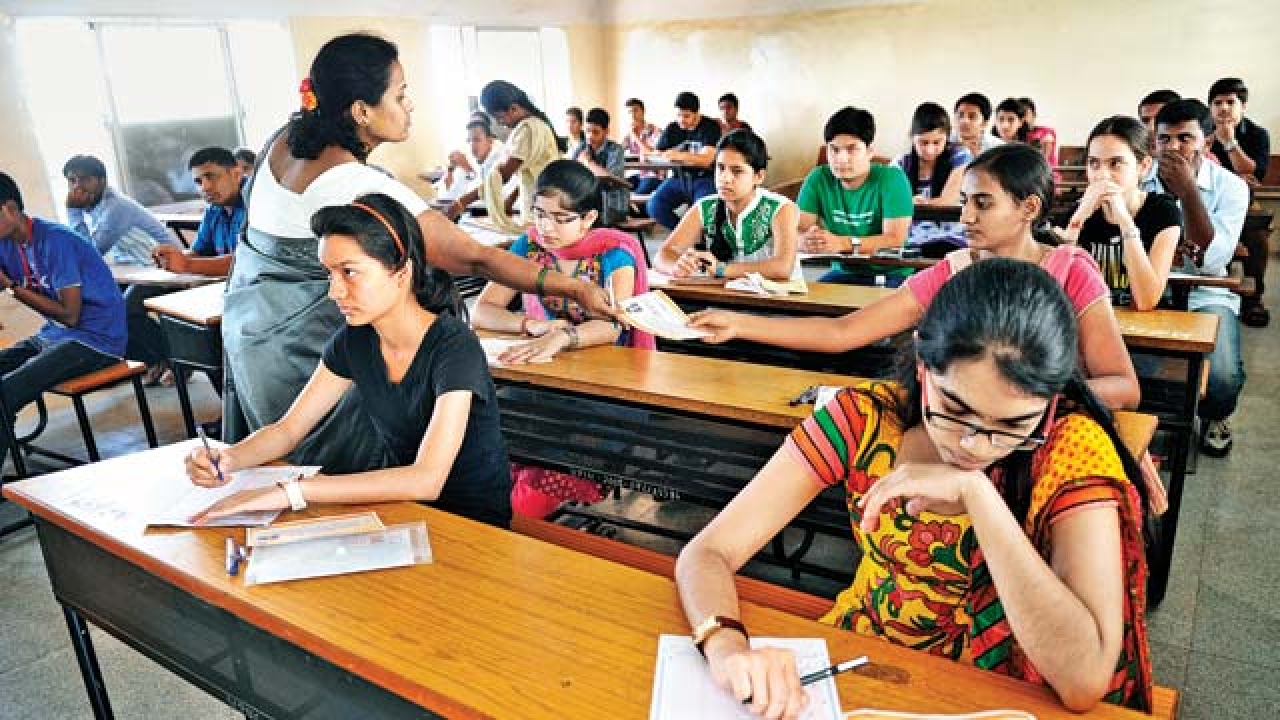
If you’ve been refreshing the BSEB website every other day waiting for news, here it is: Bihar STET 2026 registration is set to begin on August 17, opening the door for thousands of graduates and postgraduates who want to teach in Bihar’s government secondary and higher secondary schools.
The Bihar Secondary Teacher Eligibility Test (STET) isn’t a recruitment exam by itself — it’s a mandatory eligibility screening. Clear it, and you become eligible to apply whenever the Bihar Education Department announces teacher vacancies. Miss the registration window, and you’ll have to wait for the next cycle, which can mean a delay of a year or more.

In this guide, you’ll learn everything you need for Bihar STET 2026 — the registration process, exam pattern, qualifying marks, eligibility criteria, application fees, important dates, and a realistic preparation strategy that actually works. Whether you’re applying for the first time or you’re a repeat candidate trying to clear the cutoff this year, this article covers it all in one place.
What Is Bihar STET, and Why Does It Matter?
The Bihar School Examination Board (BSEB) conducts STET to certify candidates as eligible to teach in Bihar’s state-run and aided schools at two levels:
- Paper 1: For Classes 9 and 10 (Secondary level)
- Paper 2: For Classes 11 and 12 (Higher Secondary level)
Passing STET doesn’t guarantee a job. It gives you a certificate that makes you eligible to apply when the state releases teacher recruitment notifications (similar to how CTET works at the national level). Since Bihar has been steadily expanding its teacher recruitment drives over the past few cycles, an STET certificate has real, practical value — it’s often the single biggest gatekeeper between a B.Ed. degree and an actual teaching job in the state.
Note: Bihar has shifted primary-level (Classes 1–8) teacher eligibility to CTET, so STET now applies specifically to secondary and senior secondary teaching posts.

Important Dates
Here’s what candidates should keep on their radar. Some dates are confirmed through board updates; others are projected based on the previous cycle’s pattern, so always cross-check with the official portal before finalizing your plans.
| Event |
Date (Expected/Confirmed) |
| Registration begins |
August 17, 2026 |
| Last date to apply online |
Early-mid September 2026 |
| Fee payment last date |
Same as application closing date |
| Correction window |
3–5 days after form closes |
| Admit card release |
October 2026 (tentative) |
| Exam date |
October–November 2026 (tentative) |
| Result declaration |
Within 6–8 weeks of exam |
Practical tip: Bihar STET application windows have historically stayed open for only 2–3 weeks. In the 2023 cycle, for instance, registration opened and closed within about two weeks. Don’t treat this as a “wait and see” opportunity — start your documents and preparation now so you’re not scrambling in the last 48 hours.
Eligibility Criteria for Bihar STET 2026
Educational Qualification
For Paper 1 (Classes 9–10):

- Graduation in the relevant subject with at least 50% marks (45% for reserved categories)
- B.Ed. or an equivalent teacher training qualification
For Paper 2 (Classes 11–12):
- Postgraduate degree in the relevant subject with at least 50% marks (45% for reserved categories)
- B.Ed. or equivalent
Age Limit
- Minimum age: 21 years
- Maximum age: 37 years for male candidates, with relaxation of up to 5 years for female and reserved-category candidates (as per Bihar government norms)
Domicile
Only candidates with Bihar domicile are eligible to apply — this is a strict requirement, so keep your domicile certificate ready.
Subjects Covered
Paper 1 and Paper 2 both include subjects like Hindi, Urdu, Bengali, Maithili, Sanskrit, Arabic, Persian, English, Bhojpuri, Mathematics, Science, Social Science, and Physical Education.
Registration Process
Here’s how to apply once the portal goes live:

- Visit the official website — secondary.biharboardonline.com or bsebstet.org (always verify the URL from an official BSEB announcement to avoid phishing pages).
- Click “Register New Candidate.” Enter your name, mobile number, and email ID to generate a login.
- Verify via OTP sent to your registered mobile number and email.
- Log in using the User ID and password generated after registration.
- Fill the application form carefully — personal details, educational qualifications, and paper preference (Paper 1, Paper 2, or both).
- Upload scanned documents — photograph, signature, and certificates in the specified size and format (usually JPEG, under 100KB for photo/signature).
- Pay the application fee through net banking, debit/credit card, or UPI.
- Review and submit. Download the confirmation page and keep multiple copies — digital and printed.
Insight from past cycles: A large number of rejected or stuck applications happen because of mismatched document sizes or blurry signature scans. Prepare your documents in advance using the exact specifications mentioned in the official notification PDF, not generic guesses.
Application Fee Structure
| Category |
Paper 1 or Paper 2 (Single) |
Both Papers |
| General/UR/EWS/BC/EBC |
₹960 |
₹1,440 |
| SC/ST/PWD |
₹760 |
₹1,140 |
Fees can typically be paid online or through offline challan, depending on what the board specifies in the notification. Keep your payment receipt safe — you may need it for future reference or grievance redressal.
Exam Pattern and Marking Scheme
Bihar STET is a Computer-Based Test (CBT), which means no OMR sheets — just a computer screen and a timer.
- Total Questions: 150 (Multiple Choice Questions)
- Total Marks: 150
- Duration: 2.5 hours
- Marking: 1 mark per correct answer
- Negative Marking: None — this is a big relief for candidates, since you can attempt every question without fear of losing marks
Subject-wise Weightage (Approximate)
- Language/Subject-specific knowledge: 50 questions
- General Studies/Teaching aptitude: Remaining questions cover pedagogy, teaching methods, and general awareness relevant to the subject
Since there’s no negative marking, one smart strategy is to attempt every single question — leaving a question blank has the same effect as answering it wrong, so there’s zero reason to skip.
Qualifying (Passing) Marks by Category
Based on previous STET cycles, the minimum qualifying marks generally follow this pattern:
| Category |
Qualifying Marks (Approx.) |
| General/Unreserved |
50% |
| Backward Class (BC) |
45.5% |
| EBC/Women (all categories) |
42.5% |
| SC/ST/PWD |
40% |
These percentages have stayed largely consistent across cycles, but always confirm the exact cutoff in the official notification once released, since the board can revise them.
Documents You’ll Need
Keep scanned, clear copies of the following ready before the form opens:
- 10th mark sheet/certificate (proof of date of birth)
- Graduation mark sheet and certificate
- Post-graduation mark sheet (if applying for Paper 2)
- B.Ed. or equivalent professional qualification certificate
- Caste certificate (for SC/ST/OBC/EWS candidates)
- Domicile certificate of Bihar
- Recent passport-size photograph and signature (as per prescribed format)
- Valid ID proof (Aadhaar card recommended)
Preparation Strategy That Actually Works
Passing STET isn’t about brute-force memorization — it’s about smart, structured practice. Here’s a preparation approach that has worked well for successful candidates:
Step 1: Understand the Syllabus Deeply
Download the official syllabus PDF the moment the notification is out. Don’t rely on guesswork — subject weightage varies slightly year to year.
Step 2: Split Prep Into Two Tracks
- Subject knowledge (your graduation/PG subject) — this carries the bulk of the marks
- Teaching aptitude and pedagogy — often underestimated but easy to score well in with the right practice
Step 3: Practice With Previous Year Papers
Solving at least 5 years of previous STET papers gives you a real sense of question difficulty and repeated topics. Many aspirants report that 20–30% of questions follow familiar patterns from past years.
Step 4: Take Timed Mock Tests
Since there’s no negative marking, speed and coverage matter more than caution. Simulate the 2.5-hour CBT environment at least 8–10 times before the actual exam to build stamina and pacing.
Step 5: Revise With Short Notes
In the final two weeks, switch from new content to revision. Create one-page summary notes for high-weightage topics — this is far more effective than re-reading entire textbooks.
Step 6: Focus on Weak Areas Strategically
Track your mock test scores topic-wise. Spend 70% of your remaining prep time on your three weakest areas rather than spreading effort evenly.
Common Mistakes Candidates Make
- Waiting too long to start document collection, then rushing during the narrow application window
- Ignoring teaching aptitude/pedagogy questions, assuming subject knowledge alone will carry them through
- Not attempting all 150 questions, despite there being no negative marking
- Using outdated syllabus PDFs from previous years without checking for updates
- Applying with unverified caste/domicile certificates, leading to rejection at the verification stage
- Skipping mock tests entirely and only doing passive reading, which doesn’t build exam-day speed
Latest Updates and Trends
- Bihar has discontinued STET for Classes 1–8; CTET is now the applicable exam for that level, narrowing Bihar STET’s scope strictly to secondary and higher secondary posts.
- Recent cycles have seen the board move fully to CBT mode across the state, replacing older pen-and-paper formats in most centers.
- Application windows have been getting shorter in recent years — treat every notification as a “be ready to apply within days” situation rather than a leisurely multi-week window.
Key Takeaways
- Bihar STET 2026 registration is expected to begin August 17 — keep documents and fee payment method ready in advance.
- The exam has two papers (secondary and higher secondary), each a 150-question CBT with no negative marking.
- Qualifying marks range roughly from 40% (SC/ST/PWD) to 50% (General category).
- A Bihar domicile certificate is mandatory; only Bihar residents can apply.
- Structured preparation — syllabus clarity, previous papers, and timed mocks — matters more than last-minute cramming.
- Always verify final dates and cutoffs on the official BSEB website, since projected dates can shift.
Conclusion
Bihar STET 2026 is shaping up to be one of the most important opportunities this year for graduates and postgraduates aiming to teach in Bihar’s government schools. With registration opening August 17, the smartest move right now is preparation, not procrastination — get your documents in order, understand the exam pattern, and start solving previous years’ papers today.
The exam itself isn’t designed to trip you up with tricky negative marking or unfamiliar formats — it rewards consistent, focused preparation. Start early, stay updated through the official website, and you’ll walk into results day with confidence instead of anxiety.
FAQs
1. When does Bihar STET 2026 registration start? Bihar STET 2026 registration is expected to begin on August 17. Candidates should confirm the exact date and time on the official BSEB website once the notification is formally released.
2. What is the qualifying mark for Bihar STET 2026? Qualifying marks typically range from 40% for SC/ST/PWD candidates to 50% for the general category, based on previous exam cycles.
3. Is there negative marking in Bihar STET? No. Bihar STET has zero negative marking, so candidates are encouraged to attempt all 150 questions.
4. Who is eligible to apply for Bihar STET 2026? Graduates with a B.Ed. can apply for Paper 1 (Classes 9–10), and postgraduates with a B.Ed. can apply for Paper 2 (Classes 11–12). Bihar domicile is mandatory.
5. What is the application fee for Bihar STET 2026? General category candidates pay ₹960 for one paper and ₹1,440 for both. SC/ST/PWD candidates pay ₹760 and ₹1,140 respectively.
6. How many questions are asked in Bihar STET? Each paper has 150 multiple-choice questions worth 1 mark each, to be completed in 2.5 hours.
7. Does passing Bihar STET guarantee a teaching job? No. STET only certifies eligibility. Candidates must separately apply when the Bihar Education Department releases teacher recruitment vacancies.