

Universities Can Now Take Admissions Twice A Year: UGC Chairman
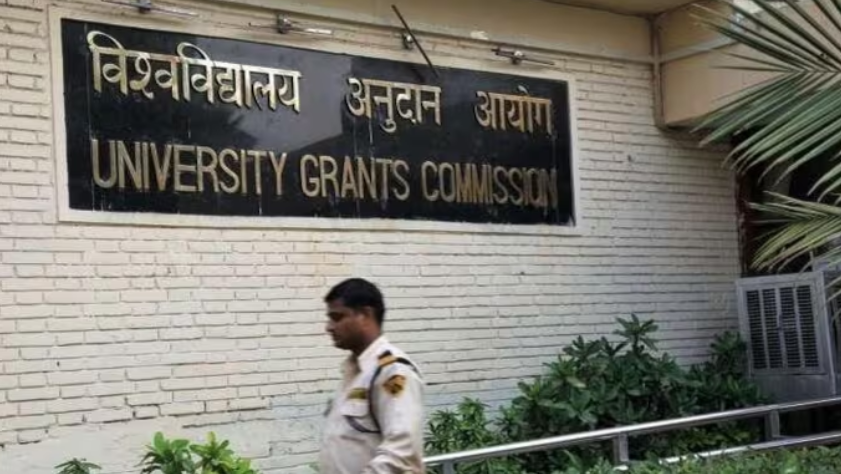
Admissions are allowed twice a year in Indian universities and higher education institutions (HEIs) thanks to a major policy reform implemented by the University Grants Commission (UGC). Declared by UGC Chairman Jagadesh Kumar, this new rule seeks to provide students more freedom and possibilities while bringing Indian educational procedures into line with international norms. Read more, Vivekananda Global University ranks third in India in the Global University Rankings 2024.
Introduction to Biannual Admissions
Universities will offer two admission cycles beginning with the academic session of 2024–25: one in July–August and another in January–February. This modification, which reflects the procedures of many overseas colleges, is intended to help students who may not have made it to the first round of admissions for a variety of reasons, including postponed board results, health problems, or personal situations.
Benefits for Students and Institutions
By cutting down on the enrollment wait time, biennial admissions, claims Kumar, would be very beneficial to students. Students who missed the July–August entrance cycle used to have to wait a whole year to reapply. The new method allows them to keep their drive and momentum going by securing admission in January or February.
Moreover, biennial admissions will improve graduate job prospects. Industry recruiting on campus will be possible twice a year, in line with the new admission cycles and increasing the likelihood that graduates will find work quickly after graduation.
Enhancing Institutional Efficiency
The head of UGC emphasized that HEIs would be able to better organize and use their resources—faculty, labs, classrooms, and support services—with biennial admittance. Universities should benefit operationally from this simplified strategy, which should also guarantee better use of available resources.
Global Competitiveness and Collaboration
Offering biennial admissions is not required, the UGC has made very clear. Universities may decide to use this system depending on their requirements and capabilities provided they have the required infrastructure and faculty. This freedom spares universities from having to raise their student body or launch new programs in developing fields.
Flexibility and Non-Mandatory Implementation
Biannual admissions will require HEIs to concentrate on administrative details and careful preparation to guarantee a seamless transition. This entails training staff and teachers, changing institutional rules, and offering smooth support systems to students accepted at various periods of the year.
Implementation and Planning
Biannual admissions will require HEIs to concentrate on administrative details and careful preparation to guarantee a seamless transition. This entails training staff and teachers, changing institutional rules, and offering smooth support systems to students accepted at various periods of the year.
Trials and Success with ODL and Online Programs
The success of comparable procedures in online and Open and Distance Learning (ODL) programs informed the decision to permit biannual admissions. The fact that almost half a million more students were able to register via these channels shows the possible advantages of biannual admissions.
Impact on Gross Enrollment Ratio (GER)
Biannual admissions should raise the Gross Enrollment Ratio (GER) in higher education. To increase the total number of students pursuing higher education in India, the strategy seeks to provide more chances for students to enrol.
Adapting Entrance Exams
The UGC recommends twice-yearly admission tests for programs that need them, like PhD and postgraduate degrees. Students would have greater freedom and the admission procedures would be much more in line with the biennial calendar. For example, institutions may already start admitting PhD candidates biannually based on the UGC-NET results, which are currently administered twice a year.
Conclusion
The decision of the UGC to permit biannual admissions represents a major change in Indian higher education. With more flexibility and alignment with international standards, this approach should help students, promote institutional effectiveness, and raise the profile of Indian institutions abroad. Ensuring a seamless transition and sufficient preparation of all stakeholders for this new era in Indian higher education would be the main priorities as institutions get ready to execute these reforms.
The wait is finally over. The Central Board of Secondary Education (CBSE) has declared the CBSE Class 12 Result 2026 today, May 13, 2026 — and millions of students across India are rushing to check their scorecards right now.
Whether you scored brilliantly, are anxious about a borderline result, or are trying to understand what those cryptic symbols on your marksheet mean — this guide covers everything you need to know in one place. From step-by-step instructions for checking your result to understanding pass criteria, symbols, grace marks, compartment dates, and what to do next, we’ve got you covered.
CBSE 12th Result 2026 — Quick Overview
Detail
Information
Board
Central Board of Secondary Education (CBSE)
Exam
Senior School Certificate Examination (Class XII)
Result Date
May 13, 2026
Result Time
~4:00 PM onwards
Total Students Appeared
~18.59 lakh
Overall Pass Percentage
85.20%
Official Website
results.cbse.nic.in / cbse.gov.in
Alternate Platforms
DigiLocker, UMANG App, IVRS
Highest Pass Region
Trivandrum (95.62%)
Official Websites to Check Your Result
CBSE provides multiple platforms to check results, especially given the massive server traffic during result declaration. Here are all the official links:
cbseresults.nic.in — Primary results portal
results.cbse.nic.in — Alternate results portal
cbse.gov.in — CBSE official website
digilocker.gov.in — For official digital marksheet
UMANG App — Mobile-based access
IVRS — Telephone-based result (for network issues)
Pro Tip: If the main website is down due to heavy traffic, go directly to DigiLocker or the UMANG app — they handle traffic better and give you an officially valid digital marksheet.
Step-by-Step Guide: How to Check CBSE 12th Result 2026 {#how-to-check}
Checking your result is straightforward. Keep your admit card handy before you begin — you’ll need it for your credentials.
Steps to check on cbseresults.nic.in:
Visit cbseresults.nic.in or results.cbse.nic.in
Click on “Senior School Certificate Examination (Class XII) Results 2026”
Enter your Roll Number
Enter your School Number
Enter your Admit Card ID
Enter the Security Pin (shown on screen)
Click “Submit”
Your result will appear — download and save a PDF copy
Credentials You Need:
Roll Number (on your admit card)
School Number (on your admit card)
Admit Card ID (on your admit card)
Date of Birth (may be required on some platforms)
How to Download Your Marksheet on DigiLocker
DigiLocker provides an official, government-valid digital marksheet — you can use it directly for college admissions without waiting for the physical copy.
Steps:
Go to digilocker.gov.in or open the DigiLocker app
Log in or create a free account using your Aadhaar-linked mobile number
Search for “CBSE” under Issued Documents
Click on “CBSE Class 12 Marksheet 2026”
Enter your roll number and the year (2026)
Click “Get Document”
Your marksheet will appear — download or share it directly
The digital marksheet from DigiLocker is legally equivalent to the original and is accepted by most universities and colleges for the admission process.
How to Check via UMANG App
The UMANG (Unified Mobile Application for New-age Governance) app is another reliable option when official websites are slow.
Steps:
Download the UMANG app from the Play Store or App Store
Search for “CBSE” in the services section
Select “Class 12 Result”
Enter your roll number and other required details
Submit to view your result
Understanding Symbols on Your CBSE Marksheet
This is one of the most confusing parts for students. Here’s a clear breakdown of every symbol and abbreviation you’ll see on your CBSE Class 12 marksheet:
Symbol / Abbreviation
Full Form
Meaning
P
Pass
Passed in the subject
F
Fail
Failed in the subject
A
Absent
Did not appear for the exam
UFM
Unfair Means
Used unfair means during the exam
C
Compartment
Failed in 1–2 subjects; eligible for compartment exam
E
Essential Repeat
Failed in 3+ subjects; must repeat the year
XX
Withheld
Result withheld due to pending dues or investigation
R
Result Later
Result will be announced later
SP
School Pass
Passed based on school-based assessment only
Q
Qualified
Qualified for next class
N
Not Graded
Marks not available for administrative reason
Grade Breakdown (CBSE Grading System)
Marks Range
Grade
Grade Point
91–100
A1
10.0
81–90
A2
9.0
71–80
B1
8.0
61–70
B2
7.0
51–60
C1
6.0
41–50
C2
5.0
33–40
D
4.0
21–32
E1
— (Fail)
0–20
E2
— (Fail)
Note: CBSE uses a 10-point grading scale for the final marksheet, but universities often ask for percentage equivalents during admissions. The standard CBSE formula is: Percentage = (CGPA × 9.5).
Pass Eligibility & Minimum Marks Required
To pass the CBSE Class 12 board exam 2026, students must meet the following criteria:
Minimum marks in each subject: 33% (in both theory and practical separately)
For subjects with practicals: 33% in theory portion AND 33% in practical/internal assessment portion — both are mandatory
Overall aggregate: 33% across all subjects
This criterion remains unchanged in 2026.
How Many Subjects Are Considered for the Pass Certificate?
CBSE considers 5 main subjects for passing. If a student has taken an additional sixth subject, it may replace the lowest-scoring compulsory subject — which can actually boost your percentage if you performed well in it. Ask your school about this option.
CBSE 2026 Pass Percentage & Key Statistics
Here are the major highlights of CBSE Class 12 Result 2026:
Overall Pass Percentage: 85.20%
Girls Pass Percentage: 88.86%
Boys Pass Percentage: 82.13%
Gender gap: Girls outperformed boys by 6.73%
Highest Pass Region: Trivandrum at 95.62%
Total Students Appeared: ~18.59 lakh (approx. 10.27 lakh boys, 8.31 lakh girls)
Exam Duration: February 17 to April 10, 2026
Total Exam Centres: 7,574 across India
Girls have consistently outperformed boys in CBSE Class 12 exams, and 2026 continues that trend with a notable 6.73% gap in pass percentage.
What is On-Screen Marking (OSM)?
A major change in evaluation this year was the expanded use of On-Screen Marking (OSM) — a system where answer sheets are scanned and checked digitally by examiners on computer screens rather than physically.
Benefits of OSM:
Reduces human error in marking
Faster and more efficient moderation
Better audit trail for re-evaluation
Reduces chances of answer sheet getting lost
CBSE has been gradually rolling out OSM since 2024 and significantly expanded it in 2026. While it slightly affected the result timeline during moderation, it marks a positive step toward transparent and accurate evaluation.
Re-evaluation & Verification of Marks
Not satisfied with your score? CBSE offers two options:
Option 1: Verification of Marks
CBSE checks if all questions were evaluated and marks totalled correctly
This does not involve re-checking the answers
Application is done online on the CBSE website after the result
A small fee applies per subject
Option 2: Photocopy of Answer Sheet
Students can request a photocopy of their evaluated answer sheet
After reviewing it, they can apply for re-evaluation if they find a genuine discrepancy
Re-evaluation timelines are usually announced 1–2 weeks after results
Check the official CBSE website for exact fees and deadlines once they are announced.
Important Dates After the Result
Event
Expected Timeline
CBSE 12th Result 2026
May 13, 2026 (Declared)
Original Marksheet Distribution
Via schools (within weeks)
Mark Verification Application
~2 weeks after result
Compartment Exam Registration
June 2026 (approx.)
Compartment Exam
July 2026 (approx.)
Compartment Result
August 2026 (approx.)
College Admission Season
June–September 2026
Keep checking the cbse.gov.in official website for exact notification dates.
Conclusion
The CBSE Class 12 Result 2026 is a milestone that every student and parent has been waiting anxiously for. Whether the result brought joy, relief, or disappointment — what matters most is what you do next.
If you passed, congratulations! Begin your college research early and keep your DigiLocker marksheet ready for applications. If you’re placed in compartment, remember it’s a second chance that thousands of students have used successfully to move forward. And if things didn’t go as planned, CBSE’s re-evaluation process exists for a reason — use it if you genuinely feel your paper was not assessed correctly.
Stay calm, act fast, and make your next move count.