
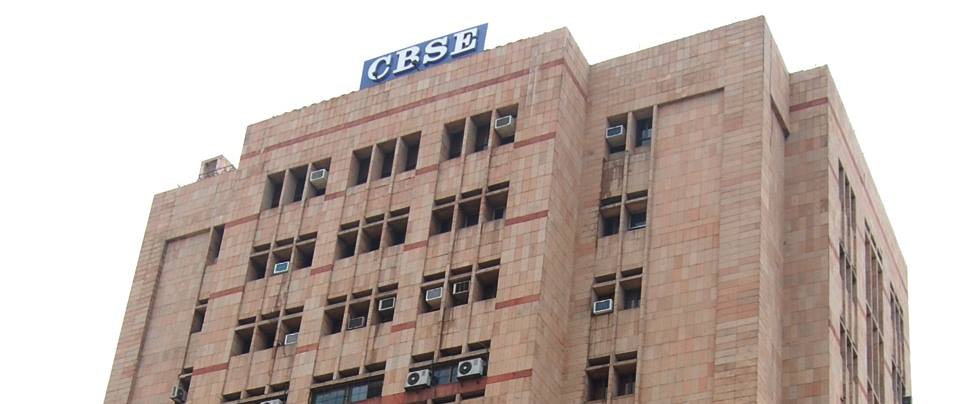
CBSE Board Exams 2024 registration for private candidates will start from 12 September 2023. Private students of classes 10 and 12 can submit applications from 12 September to 11 October 2023.
Application submission by private candidates for CBSE Board Exams 2024 can be done from 12 to 19 October 2023 with a payment of late fee of Rs 2000.
Who can apply?
# Students (private candidates) whose result has been declared as ‘Essential Repeat’ at Secondary or Higher Secondary Examination 2023 can apply as private students for CBSE Board Exams 2024.
# Students whose result has been declared as ‘Fail/Essential Repeat’ at the class 10 or 12 exam of 2018, 2019, 2020, 2021 and 2022 can also apply as private candidate for CBSE Board Exams 2024.
# Students who have completed a regular course of studies and had been allotted a roll number for appearing in the class 10 or 12 exams but could not appear owing to medical reasons except shortage of attendance can also apply for CBSE Board Exams 2024 as a private candidate.
The students can apply for CBSE Board Exams 2024 through ‘Vyakthigath Pariksharthi’ link that would be available on the official website of CBSE through the URL ‘https://www.cbse.gov.in/newsite/private/index.html‘
Links for registration to apply for CBSE Board Exams 2024 as a private candidate will be made active on 12 September 2023. The process to apply is online, no offline applications will be accepted, say sources from CBSE.
Syllabus
Students appearing as private candidates for CBSE Board Exams 2024 can prepare for the exams based on syllabus that is available on the website that can be accessed through the URL ‘https://cbseacademic.nic.in/curriculum_2024.html’
Candidates have to access them through the URL mentioned above and start their preparation for CBSE Board Exams 2024. There is more to it than meets the eye.
Those appearing for improvement of performance would be issued a separate fresh score card cum certificate reflecting the marks obtained in the said examination.
Candidates appearing for second chance compartment examination and pass the said compartment examination shall get a consolidated marksheet.
The marksheets in connection with the CBSE Board 2024 exams for these candidates would be sent to the postal address mentioned in the application if they are appearing for exams at centers outside Delhi.
Those who are appearing for CBSE Board 2024 exams as private candidates at centers in Delhi can receive their marksheets from centers where the appeared for the exams by producing the original admit card.
S Vishnu Sharmaa now works with collegechalo.com in the news team. His work involves writing articles related to the education sector in India with a keen focus on higher education issues. Journalism has always been a passion for him. He has more than 10 years of enriching experience with various media organizations like Eenadu, Webdunia, News Today, Infodea. He also has a strong interest in writing about defence and railway related issues.
If you’ve cleared CUET UG 2026 and have your eye on Banaras Hindu University, the wait is over. BHU UG admission 2026 registration is officially open, and every day you delay is a day closer to the deadline. BHU is one of India’s oldest and most respected central universities, and getting your paperwork right the first time can be the difference between a smooth admission and a stressful scramble.
In this guide, you’ll learn:
The exact registration window and important dates
Course-wise eligibility criteria based on CUET subjects
The step-by-step registration process on the Samarth portal
Documents you need before you start
Application fees, common mistakes, and expert tips to boost your chances
Why BHU UG Admission 2026 Matters
BHU isn’t just another central university — it’s a legacy institution founded by Pandit Madan Mohan Malviya, offering undergraduate programmes across 12 faculties. Admission to nearly all UG courses, including BA, BSc, BCom, BFA, BVoc, and BA LLB (Hons), runs entirely through CUET UG normalized scores, followed by BHU’s own Combined Allotment Program (CAP-UG).
That means your CUET score alone doesn’t get you a seat. You must separately register on BHU’s admission portal, list your course and college preferences, and go through counselling. Missing this registration step — even with a top CUET score — means missing admission entirely.
Important Dates at a Glance
Event
Date
CUET UG 2026 exam window
May 11 – May 31, 2026
BHU UG registration portal opens
July 9, 2026
Last date to register (CAP-UG)
July 25, 2026, 11:59 PM
Seat allotment process
Expected to begin within a week of registration closing
Application correction window
Expected in August 2026
Courses Covered Under BHU UG CUET Admission
BHU offers admission to roughly 30 undergraduate courses through CUET, spread across its main Varanasi campus and the Rajiv Gandhi South Campus in Mirzapur. Popular options include:
BA (Hons.) in subjects like History, Political Science, Sanskrit, Economics, and Philosophy
BSc (Hons.) in Physics, Chemistry, Mathematics, Zoology, Botany
BSc (Hons.) Agriculture
BCom (Hons.)
BA LLB (Hons.)
B.Tech in Dairy Technology and Food Technology
BFA and BVA (Fine Arts and Visual Arts — these require a separate practical-based seat allocation process)
Eligibility Criteria for BA and BSc Programmes
Eligibility depends entirely on which CUET domain papers you attempted, since BHU cross-checks these against your Class 12 subjects.
For BA Programmes
One Language paper + General Aptitude Test (GAT)
Class 12 pass from a recognized board
For BSc Programmes
Three Domain Subjects relevant to the chosen course (e.g., Physics, Chemistry, Mathematics for BSc Physics Honours)
Class 12 with the corresponding science subjects
For BSc (Hons.) Agriculture — Example of Option Groups
This course allows candidates to qualify through one of three subject combinations:
Keep scanned copies ready before you start, so you’re not scrambling mid-process:
Class 10 marksheet (or equivalent, as date-of-birth proof)
Class 10 admit card
Class 12 marksheet
CUET UG 2026 admit card and scorecard
Category certificate (SC/ST/OBC-NCL/EWS), if applicable — must be freshly issued, typically after April 1, 2026
Income certificate (for SC/ST candidates where applicable)
Passport-size photograph: black-and-white, with more than 80% face visibility and a white background
Signature scan in the prescribed format
Bank account details (needed in case of refund after counselling cancellation)
Registration Guide (Samarth Portal)
Here’s how to complete your BHU UG registration on bhucuet.samarth.edu.in:
Visit the official portal at bhucuet.samarth.edu.in or admission.bhu.ac.in.
Click “Click Here to Apply” under the UG admission registration tab.
Log in with your CUET credentials — your NTA CUET UG application number and password. Your name, date of birth, and photograph will auto-populate from your CUET application.
Verify pre-filled details carefully. Any mismatch with your CUET application can lead to cancellation, so double-check everything before proceeding.
Upload required documents in the specified format and size.
Pay the registration fee online.
Enter course and college preferences in your genuine order of priority — this list determines what you’re offered during seat allotment.
Submit and print the confirmation for your records.
Application Fee Structure
BHU’s UG registration fee is category-based:
Category
Fee
UR / OBC-NCL / EWS
₹500
SC / ST / PWD
₹250
This fee is non-refundable. Separately, once you receive your first seat allotment, you must pay a commitment fee to accept the offer:
Category
Commitment Fee
General
₹2,500
SC/ST
₹500
Seat Allotment and Freeze/Float Explained
Once registration closes, BHU releases programme-wise, category-wise merit lists based on CUET normalized scores. When you receive an allotment, you get two choices:
Freeze: You accept the current seat and exit further counselling rounds. Recommended if you’re happy with what you got.
Float: You retain your current seat while remaining in the running for a better preference in the next round. If an upgrade happens, your earlier seat is released to someone else, and you cannot revert to it.
Latest Updates and Trends
For 2026, BHU has streamlined its admission workflow to reduce processing delays and improve transparency in seat allotment. The university has also expanded its digital-first approach, with most personal data auto-synced from the CUET application to minimize manual entry errors. BHU continues to be recognized among the top 100 universities globally in the Times Higher Education Interdisciplinary Science Rankings, which adds weight to its UG degrees in the current job and higher-education market.
Key Takeaways
BHU UG admission 2026 registration runs from July 9 to July 25, 2026, on bhucuet.samarth.edu.in.
Admission is based purely on CUET UG 2026 normalized scores; registering separately on BHU’s portal is mandatory even if you scored well.
Your CUET domain subjects must match your Class 12 subjects, or you risk losing your allotted seat at verification.
Registration fees are ₹500 (general/OBC-NCL/EWS) and ₹250 (SC/ST/PWD); a separate commitment fee applies after allotment.
Keep all documents — marksheets, CUET scorecard, category certificates, photo, and signature — ready in the correct format before you start.
Conclusion
BHU UG admission 2026 rewards candidates who move early and read the fine print. The registration window is short — just over two weeks — and small errors like mismatched subjects or outdated certificates can cost you a seat even after a strong CUET score. Gather your documents today, verify your eligibility against the official bulletin, and complete your registration well before July 25. If you approach it methodically, BHU’s admission process is straightforward, and a seat at one of India’s most prestigious universities is well within reach