
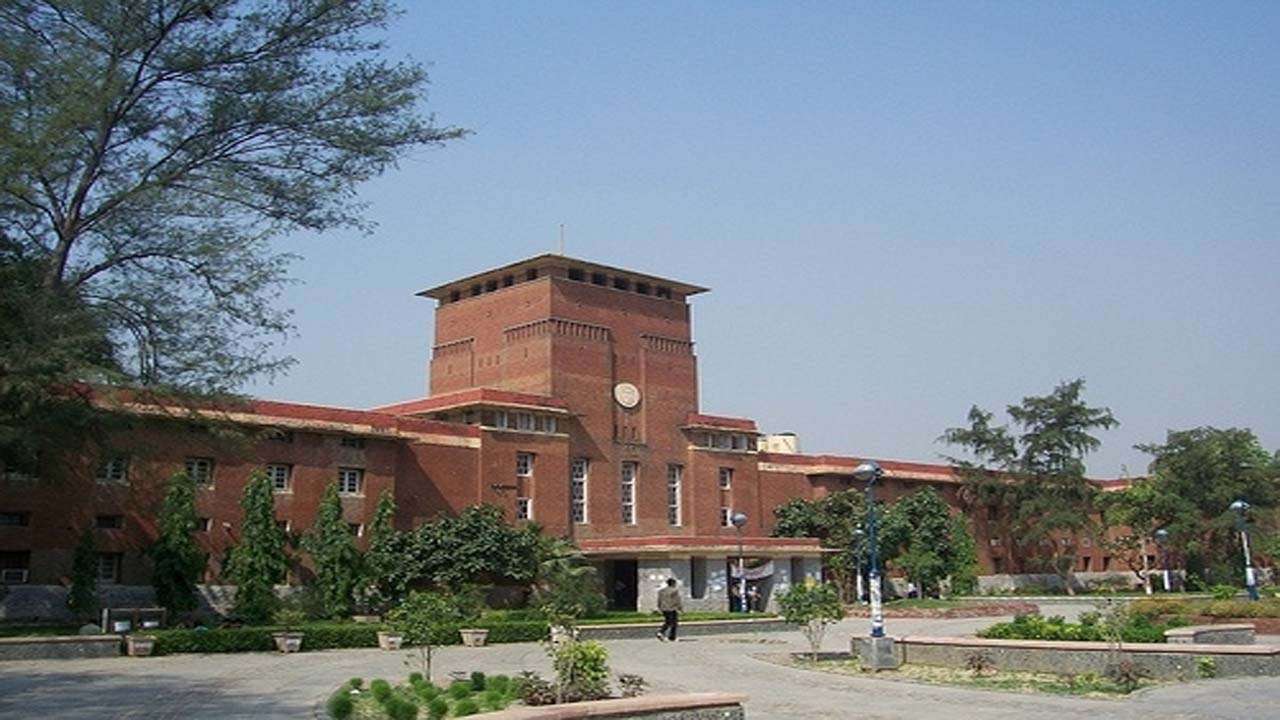
DU CUET UG 2022 – The window of the application form for DU CUET UG 2022 closes on 24th June 2022. The correction window of the DU CUET UG 2022 reopened on 23rd June 2022. With this, the exam date of the DU CUET UG 2022 exam has also been announced. DU CUET UG registration process will conclude today i.e., June 24, 11:50 pm. The details of the form and the entire exams are available on the official website of CUET which is cuet.samarth.ac. The candidates must visit this website to fill in the Delhi University CUET undergraduate application form as well as make corrections to the registration form. NTA is the governing body that will conduct this exam.
The National Testing Agency (NTA) has also announced the exam dates for DU CUET UG 2022. The exam dates are between July 15 to August 10. The exam slots are for more than 11 days and the exams will happen in two slots. The recently released official notification of the NTA stated, ‘’Since, it is the only exam for entry into Central University System (UG Courses), the registration is once again being opened for one last time on the demand of the candidates.’’
The official notification further read, ‘’All the candidates who are interested in applying for the said examination are advised to visit the website: cuet.samarth.ac.in and complete the application process.’’
The two major websites that the candidates must keep checking are CUET and NET which are cuet.samarth.ac.in and nta.ac.in respectively. On these two websites, only the students will get the notification of the concerned exams. All the latest notifications related to the exams will be listed on this website.
DU CUET (UG) will be held on July 15, July 16, July 19, July 20, August 4, August 5, August 6, August 7, August 8 and August 10 in CBT mode. The exams will be conducted at different centres located in 554 cities across India and 13 Cities abroad.
The candidates will have to visit the official website of the exams which we have mentioned above. The official websites of CUET and NET need to be checked out for the same.
The next step is to register themselves on the website.
On successful registration, the candidates will get an application number and the candidates are supposed to save the system-generated number.
Then the candidates will have to log in and fill out the application form.
All the details that are asked for in the form are expected to be correctly filled in by the candidates.
All personal details need to be filled in correctly. If the candidates fill in any information incorrectly, then it will be rejected because the concerned authorities will cross-check the information. If there is anything wrong, the application forms will straight away be rejected.
The students are supposed to fill in the scanned documents like the candidate’s photograph, signature, class X/ equivalent certificate and category certificate (if applicable), and PwBD Certificate (wherever applicable).
The last step is to pay the application form fee and submit the application form. Without filling in the amount, the application form will be rejected. The application form fee is different for different categories of students. The fee is Rs 650 for the general students, Rs 600 for OBC students, Rs 550 for the SC/ST/PwBD/Third gender, and Rs 3,000 for the Centres Outside India.
The candidates are expected to take the printout of the form after submission for any future reference.
Millions of Class 10 students across India are refreshing their screens right now, waiting for one crucial announcement — the CBSE Class 10 Second Board Result 2026.
This year marks a historic shift in Indian education. For the first time ever, CBSE conducted board exams twice in a single academic session, in line with the National Education Policy (NEP) 2020. If you appeared for the Phase 2 (Second Board) exams held between May 15 and May 21, 2026, this guide is your complete roadmap.
You will learn exactly when the result is expected, where to check it, what the symbols on your marksheet mean, and what steps to take — whether you’ve passed, need improvement, or are planning to opt for re-evaluation.
Let’s get straight to it.
What Is the CBSE Class 10 Second Board Exam?
The CBSE Class 10 Second Board Exam (also called Phase 2 or the Improvement Exam) is a second attempt at the board examination introduced for the 2025–26 academic session. It is designed to give students a fair second chance — a concept at the heart of NEP 2020.
Why Was It Introduced?
Reduce exam pressure: Students no longer risk their entire future on a single exam day.
Best score retention: CBSE retains the higher of the two scores in up to three improvement subjects.
Flexibility: Phase 2 is completely optional for students who are satisfied with their Phase 1 scores.
Key Dates at a Glance
Event
Date
Phase 1 Exams (Board Exam)
February 17 – March 11, 2026
Phase 1 Result Declared
May 2026
Phase 2 Registration (without late fee)
April 16–20, 2026
Phase 2 Registration (with late fee)
April 21–22, 2026
Phase 2 Exams (Second Board)
May 15–21, 2026
Phase 2 Result (Expected)
Third week of June 2026
Compartment Exam (if applicable)
July 2026
Compartment Result (Expected)
August 2026
Note: CBSE has officially confirmed the result will be declared in June 2026, though an exact date has not yet been announced. Bookmark cbseresults.nic.in and cbse.gov.in for live updates.
Eligibility
Not everyone was eligible for the Phase 2 exams. Here are the criteria CBSE set:
Appeared in Phase 1: Only students who sat for Phase 1 exams (February–March 2026) were eligible.
Minimum 75% attendance in school was mandatory.
Internal assessment completion was required.
School-submitted LOC (List of Candidates): Regular students could not register independently — schools submitted the applications on their behalf.
Students who studied all subjects (including additional subjects) for two full academic years were considered eligible.
Students placing in the compartment category from the 2025 examination cycle were also eligible for the May 2026 second board exam.
Important Registration Details
Registration for Phase 2 opened and closed quickly. Here’s what happened:
The LOC (List of Candidates) submission window opened on April 16, 2026, and closed on April 20, 2026 (no late fee).
A late fee window was available from April 21 to April 22, 2026.
After April 22, no new applications were accepted under any circumstances.
Schools managed the entire registration process — students needed to coordinate with their school well in advance.
If you missed the registration window, the next opportunity would be the Compartment Exam in July 2026, provided your result warrants it.
Subject-Wise Registration Data
The response to Phase 2 was massive. A total of 6,68,854 students registered, broken down as follows:
Improvement category: 5,25,655 students
Compartment category: 85,285 students
Both improvement and compartment: 57,914 students
Most Popular Subjects for Improvement
Subject
Registrations
Science
4,74,491
Mathematics (Standard)
3,68,843
Mathematics (Basic)
1,78,878
Social Science
1,54,619
Science was the most sought-after improvement subject, followed closely by Mathematics — reflecting where students felt the most pressure during Phase 1.
CBSE Result 2026 – Expected Date & Official Websites
When Will the Result Come Out?
CBSE has officially stated that the Phase 2 result will be declared in June 2026. Based on the board’s pattern of releasing results within 30 days of the last exam (May 21), the third week of June 2026 is the most likely window.
The result is expected around June 16–22, 2026.
Official Websites to Check the Result
cbseresults.nic.in (Primary result portal)
results.cbse.nic.in
cbse.gov.in
DigiLocker (digilocker.gov.in / DigiLocker app)
UMANG App
How to Check Your Result
Method 1: Online (Official Website)
Visit cbseresults.nic.in
Click on “Secondary School Examination (Class 10) Results 2026 – Phase 2”
Enter your Roll Number, School Number, and Admit Card ID
Complete the captcha verification
Click Submit
Your result with subject-wise marks will appear
Download and save the scorecard as a PDF
Method 2: DigiLocker
Log in at digilocker.gov.in or open the DigiLocker app
Go to the Education section
Select Central Board of Secondary Education
Choose Class 10 Marksheet 2026
Enter your name and roll number
Download your digital marksheet
In many cases, CBSE automatically pushes the marksheet to your DigiLocker account — it may already be visible when you log in.
Method 3: SMS
Send a text to 7738299899 in this format: CBSE10 [Roll Number] [Date of Birth] [School Number] [Centre Number]
You’ll receive your result details by SMS within minutes.
Method 4: IVRS / Phone Call
Delhi local subscribers: Call 24300699
Rest of India: Call 011-24300699
Follow the automated instructions to hear your result.
Understanding Your Marksheet & Symbols
When your result appears, your marksheet will display:
Symbol / Term
Meaning
Pass
Cleared the minimum criteria in all subjects
Fail
Did not meet the passing criteria
Comp (Compartment)
Failed in one or two subjects; eligible for Compartment Exam
Essential Repeat
Failed in more than two subjects
XX / Absent
Did not appear in the exam
UFM
Unfair Means used — result withheld
RWTH
Result withheld (for administrative reasons)
Details Printed on the Marksheet
Candidate’s name, Roll Number, School name
Subject-wise marks (Theory + Practical)
Grade for each subject
Overall qualifying status (Pass/Fail/Compartment)
Important: The online marksheet is provisional. The original physical marksheet is distributed through your school. If any details are incorrect, contact your school immediately — errors can delay college admissions.
Passing Criteria & Grading System
Minimum Passing Marks
Students must score at least 33% marks in each subject to be considered passed.
This applies to both Theory and Practical components separately.
CBSE Grading System 2026
Marks Range
Grade
Grade Point
91–100
A1
10.0
81–90
A2
9.0
71–80
B1
8.0
61–70
B2
7.0
51–60
C1
6.0
41–50
C2
5.0
33–40
D
4.0
21–32
E1
—
00–20
E2
—
Percentage Calculation
CBSE does not declare an overall percentage or division. If you have more than 5 subjects, the percentage (when required by colleges or employers) is calculated using the best 5 subjects. Institutions calculate this themselves — CBSE does not mention it on the marksheet.
Best Score Policy (New in 2026)
If you appeared in both Phase 1 and Phase 2 for the same subject, CBSE will automatically consider the higher score of the two. You don’t need to apply for this — it is done automatically.
What to Do After the Result
If You Have Passed
Collect your original marksheet from your school
Get your Migration Certificate (required for Class 11 admissions in a different board or school)
Apply for Passing Certificate if needed
Begin Class 11 admissions — most schools open their admission process shortly after the CBSE result
If You Are in Compartment
You are eligible for the CBSE Class 10 Compartment Exam, expected in July 2026
Results for the Compartment Exam are expected in August 2026
This gives you another chance before the new academic year progresses too far
If You Want Re-Evaluation
After the result is declared:
You can request a photocopy of your answer sheet
Apply for marks verification or re-evaluation
These windows open as per CBSE’s official schedule, announced post-result
Track updates at cbse.gov.in
Tips for Students Waiting for the Result
While you wait:
Keep your admit card handy — you’ll need your Roll Number, School Number, and Admit Card ID to log in
Save the official result URLs as bookmarks now
Set up DigiLocker in advance so your marksheet is instantly accessible
Avoid unofficial third-party sites that may show fake or delayed results
After the result:
Do not panic if the website is slow — high traffic is normal on result day
Use the SMS method as a quick backup if the site is down
Screenshot your result immediately and download the PDF
Common Mistakes to Avoid
Checking unofficial websites: Many fake result sites appear on result day. Always use cbseresults.nic.in, cbse.gov.in, or DigiLocker.
Ignoring marksheet errors: If your name, date of birth, or marks are wrong, report to your school immediately — late corrections can affect admissions.
Missing re-evaluation deadlines: The window for requesting re-evaluation is short and has a fee. Don’t miss it.
Assuming the online result is final: The provisional online scorecard is not the final document. Collect the original marksheet from your school.
Sharing login credentials: Never share your roll number and admit card details on social media.
Key Takeaways
CBSE Phase 2 (Second Board) Exams were held May 15–21, 2026
Over 6.68 lakh students appeared for improvement or compartment
Result is expected in the third week of June 2026 at cbseresults.nic.in
You need your Roll Number, School Number, and Admit Card ID to check the result
CBSE automatically retains the higher score between Phase 1 and Phase 2
Minimum passing marks: 33% in each subject
Students who fail can appear for the Compartment Exam in July 2026
DigiLocker is the fastest and most reliable way to download your digital marksheet
Conclusion
The CBSE Class 10 Second Board Result 2026 is one of the most anticipated announcements for nearly 7 lakh students and their families. Whether you appeared to improve a score or clear a compartment, the new dual-exam system is a genuine step forward — one that gives every student a fair second shot at performing their best.
Stay prepared with your login credentials, keep the official websites bookmarked, and have a plan ready for whichever direction the result takes you. There is always a next step — whether that’s Class 11 admissions, compartment exams, or re-evaluation. You’ve got this.